Best Red Dot for 50 Beowulf is not just about clarity or battery life—it’s about survival under brutal recoil, consistent zero retention, and real-world durability when every shot hits like a hammer. I’ve spent significant time behind big-bore AR platforms, and I can tell you: weak optics don’t last.
The .50 Beowulf generates sharp impulse recoil that exposes weaknesses in emitter design, mounting interfaces, and internal electronics. Budget optics might look fine on paper, but under repeated firing, issues like flickering emitters, wandering zero, or cracked housings start showing up fast.
In this guide, I break down six optics that I trust on heavy-caliber platforms. These aren’t just spec-sheet winners—they’re optics that handle recoil, maintain zero, and deliver consistent performance when it matters.
Top Product List: Best Red Dot for 50 Beowulf
Aimpoint PRO
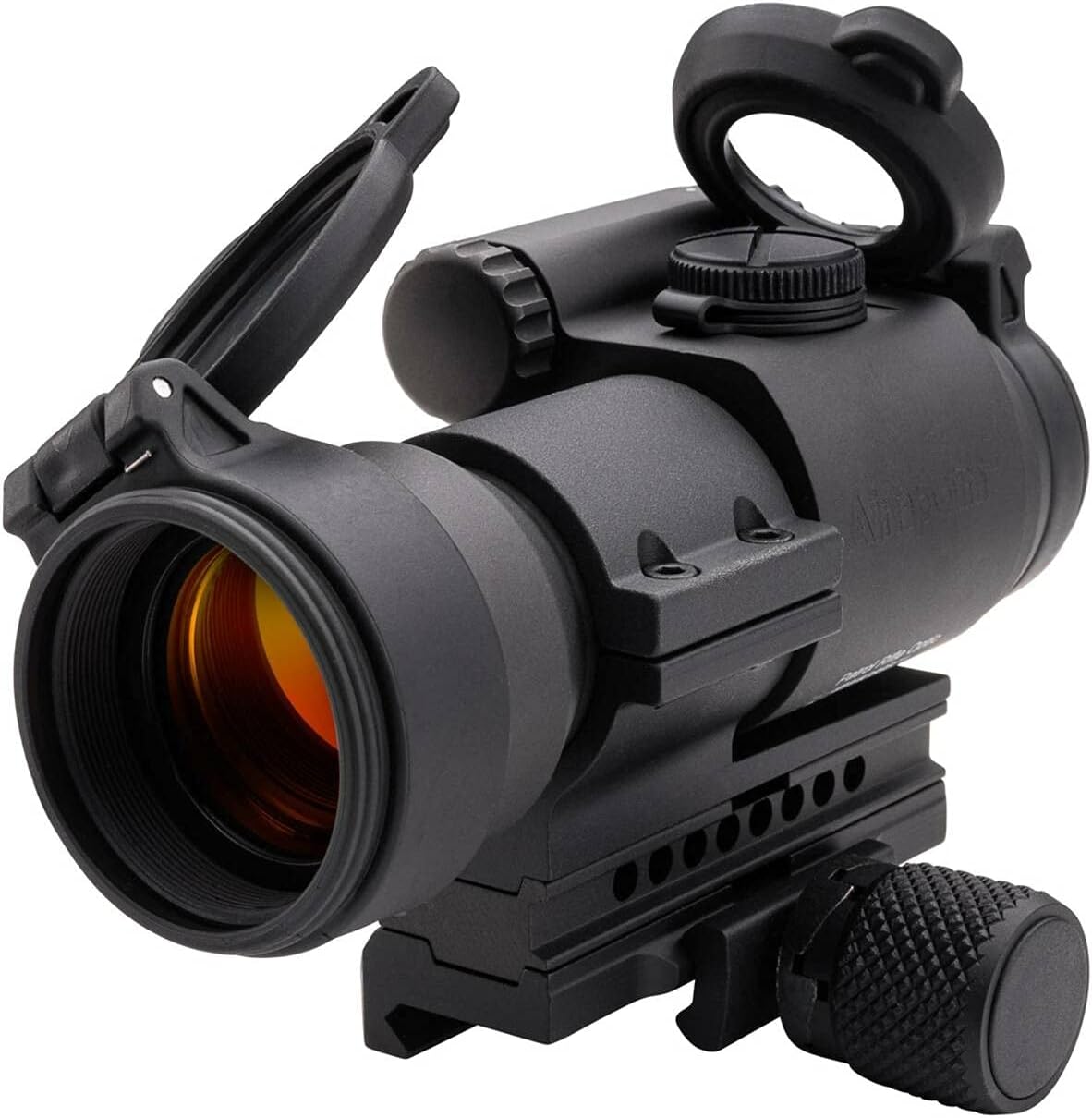
The Aimpoint PRO is a tank of a red dot built for duty rifles and harsh environments. It’s one of the most proven optics when it comes to recoil endurance and long-term reliability.
Specs:
- 2 MOA dot
- 30mm tube
- 30,000+ hour battery life
- Night vision compatible
- QRP2 mount included
Pros:
- Exceptional durability under recoil
- Crystal-clear glass with minimal tint
- Long battery life
Cons:
- Heavier than micro dots
- Bulky profile
My hands-on notes:
The PRO handles recoil impulse extremely well—no flicker, no shift. Parallax is minimal at practical distances, and the dot stays consistent even during rapid follow-up shots. The deck height with included mount allows a comfortable absolute co-witness.
What people say online:
Users consistently report thousands of rounds on hard-kicking rifles without zero loss. It’s often called “boring reliable,” which is exactly what you want.
Mounting clarity:
Includes a Picatinny mount out of the box—no additional plates needed.
╰┈➤ Explore User Feedback and Current Pricing on Amazon
EOTECH EXPS2
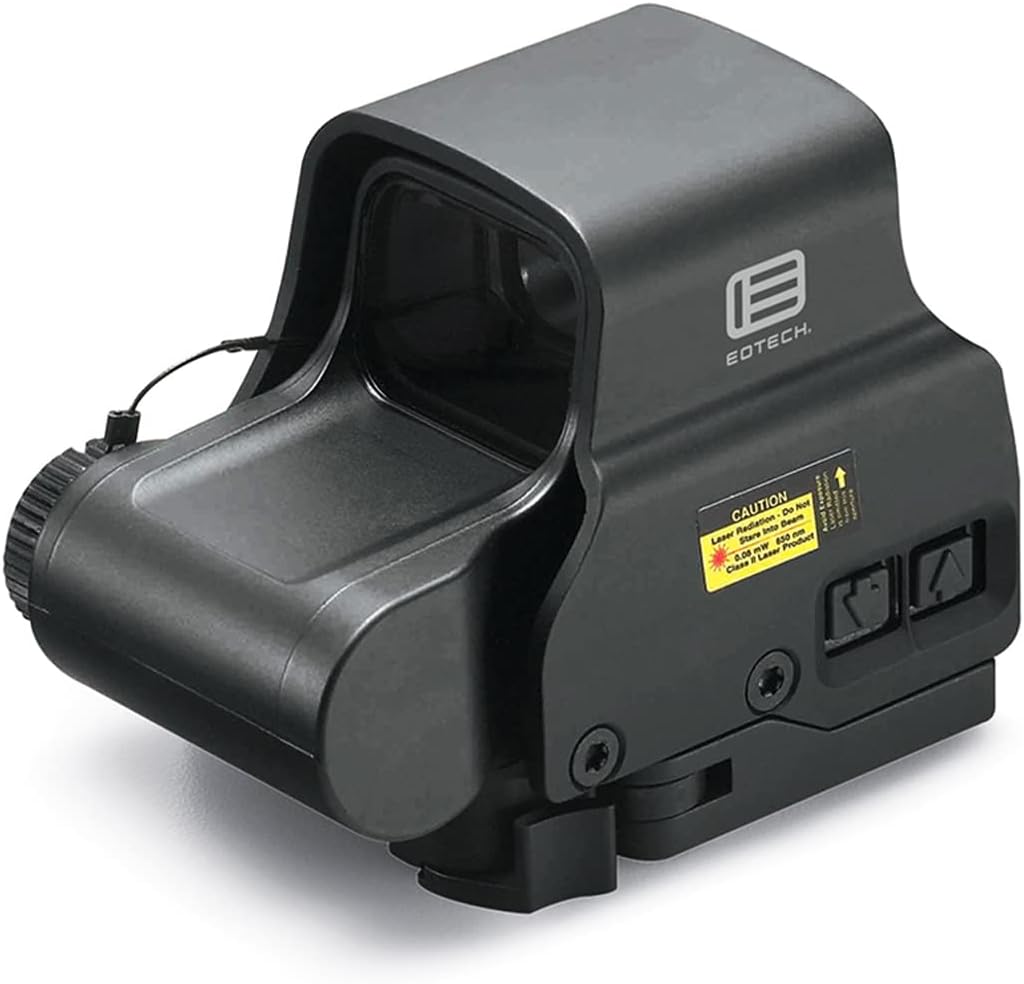
The EXPS2 uses holographic technology, which changes how the reticle behaves under recoil and offers a distinct advantage for fast target acquisition.
Specs:
- 65 MOA ring + 1 MOA dot
- Side buttons
- CR123 battery
- Quick detach mount
Pros:
- Fast reticle acquisition
- Excellent for close-range power calibers
- Wide viewing window
Cons:
- Shorter battery life
- Slightly heavier
My hands-on notes:
The holographic reticle remains crisp regardless of eye position, which reduces perceived parallax shift. Under heavy recoil, the reticle doesn’t smear or distort. The large window helps track targets during recoil recovery.
What people say online:
Shooters love it for big-bore rifles because the reticle is easy to reacquire after recoil impulse.
Mounting clarity:
Direct Picatinny mount with integrated QD lever.
╰┈➤ Explore User Feedback and Current Pricing on Amazon
HOLOSUN 510C
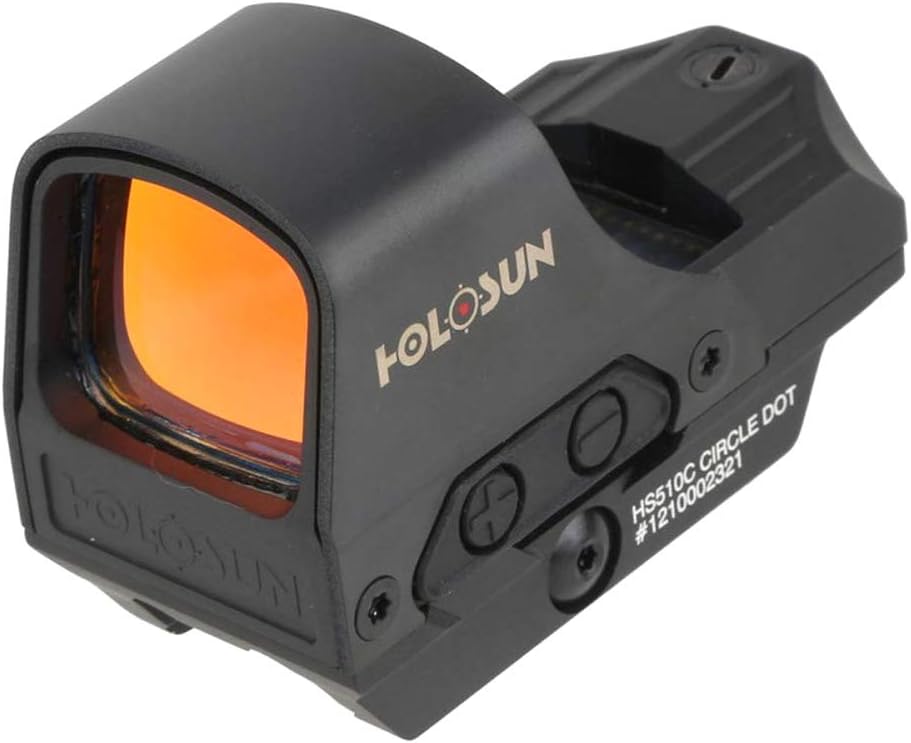
The 510C is a hybrid open emitter optic with a large window and versatile reticle system.
Specs:
- Circle-dot reticle
- Solar + battery power
- Titanium hood
- Shake Awake
Pros:
- Huge field of view
- Multiple reticle options
- Lightweight for its size
Cons:
- Open emitter can collect debris
- Slight blue tint
My hands-on notes:
The wide window makes recoil tracking easier, especially on rapid shots. Parallax is well controlled, though not Aimpoint-level. The emitter can get partially occluded in muddy or dusty environments.
What people say online:
Popular for AR platforms due to value and performance, though some users note durability concerns under extreme abuse.
Mounting clarity:
Comes with integrated Picatinny mount.
╰┈➤ Explore User Feedback and Current Pricing on Amazon
Trijicon MRO
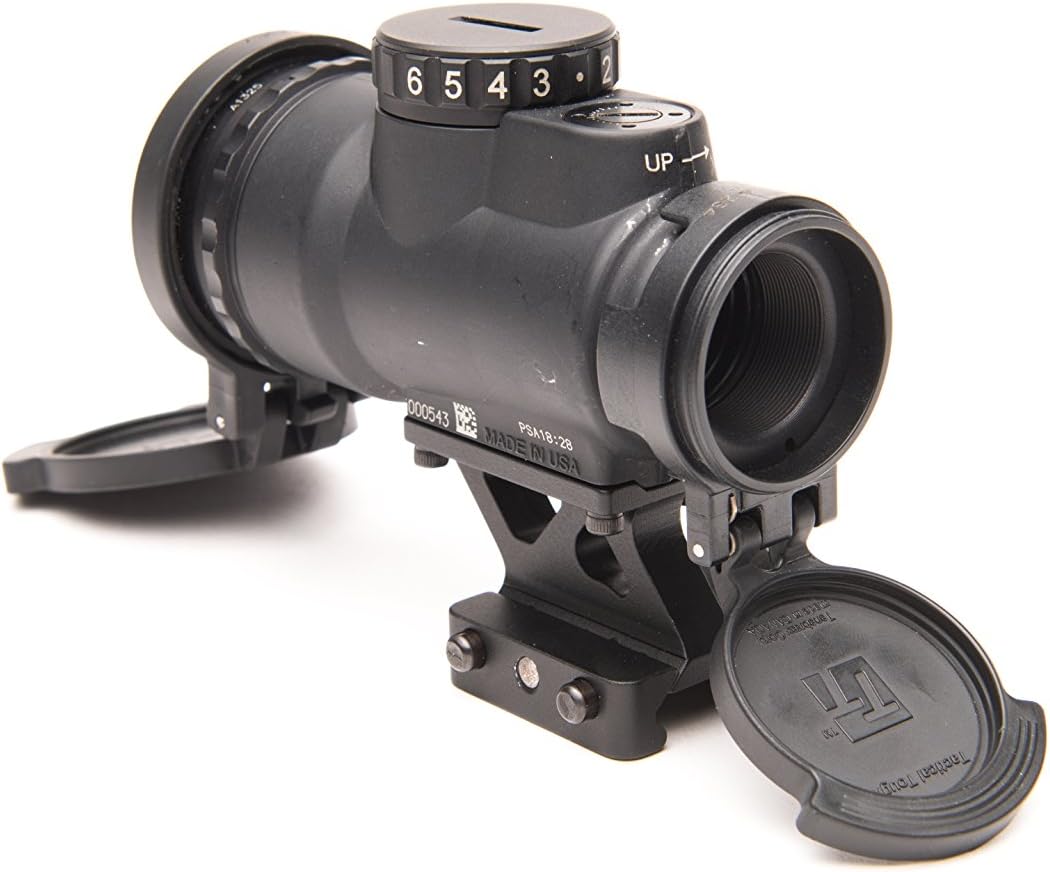
The MRO is designed for durability and fast acquisition, with a large objective lens and rugged housing.
Specs:
- 2 MOA dot
- 5-year battery life
- Fully sealed housing
- Ambidextrous controls
Pros:
- Extremely durable
- Wide field of view
- Long battery life
Cons:
- Slight magnification effect
- Noticeable lens tint
My hands-on notes:
The MRO’s durability stands out—it shrugs off recoil easily. However, the slight magnification (around 1.05x) can affect perception. Parallax is controlled but not perfect at extreme angles.
What people say online:
Praised for ruggedness, though some users dislike the tint and magnification.
Mounting clarity:
Requires a mount (often bundled depending on package).
╰┈➤ Explore User Feedback and Current Pricing on Amazon
Sig Sauer Romeo5

The Romeo5 is a budget-friendly optic that punches above its weight in reliability.
Specs:
- 2 MOA dot
- MOTAC (motion activation)
- 40,000-hour battery life
- IPX7 waterproof
Pros:
- Affordable
- Good battery life
- Lightweight
Cons:
- Basic glass quality
- Less durable than premium options
My hands-on notes:
Surprisingly resilient, but you can feel the difference in build compared to higher-end optics. Parallax is acceptable for its class, but slight dot shift appears at extreme angles.
What people say online:
Widely recommended as a budget option, though not always trusted for heavy recoil long-term.
Mounting clarity:
Includes a Picatinny mount.
╰┈➤ Explore User Feedback and Current Pricing on Amazon
Primary Arms SLX MD-25
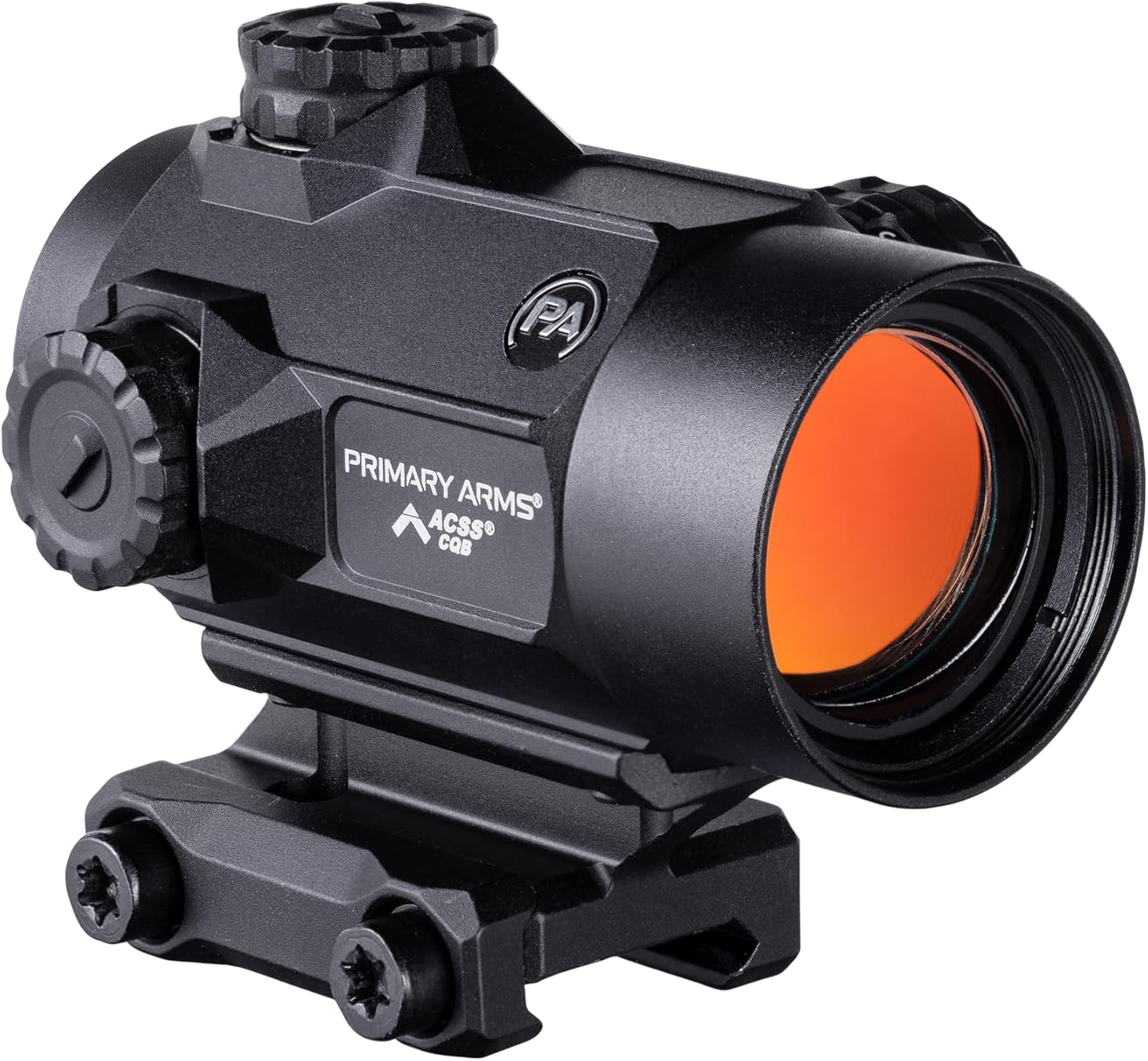
The MD-25 offers a larger objective lens with solid durability and modern features.
Specs:
- 2 MOA dot
- 25mm objective
- 50,000-hour battery life
- Multiple mounting heights
Pros:
- Large window
- Strong battery performance
- Good value
Cons:
- Slight edge distortion
- Buttons are stiff with gloves
My hands-on notes:
The larger lens helps maintain sight picture through recoil. There’s minor distortion near the edges, but center clarity is solid. Button tactility is firm—usable with gloves but not ideal.
What people say online:
Considered a strong mid-tier option with good durability for the price.
Mounting clarity:
Ships with multiple mounts for co-witness flexibility.
╰┈➤ Explore User Feedback and Current Pricing on Amazon
How I Tested / Evaluation Criteria
Parallax:
I evaluated each optic by shifting eye position at 25–100 yards to observe reticle movement relative to the target. True zero shift matters more than perceived movement, especially on a hard-recoiling platform.
Co-witness / deck height:
Deck height determines how naturally the optic aligns with backup irons. I tested both absolute and lower 1/3 setups to see which optics maintained a consistent cheek weld under recoil.
Durability:
Each optic was judged on housing strength, sealing, and internal electronics. Heavy recoil exposes weak solder points and poor emitter stabilization quickly.
Battery:
Battery life isn’t just runtime—it’s also about reliability. I looked at battery compartment design, cap sealing, and whether recoil caused intermittent power loss.
Brightness range:
From low-light to bright daylight, I tested how well each optic maintained a crisp reticle without blooming or washout.
Glass quality:
Clarity, tint, and distortion all matter. I paid attention to edge distortion and how coatings affected color fidelity.
Controls ergonomics:
Button size, placement, and tactile feedback were tested with gloves. Poor controls become a real issue in cold or wet conditions.
Mounting ecosystem:
I evaluated how easy each optic was to mount securely, including compatibility with standard Picatinny rails and aftermarket mounts.
How to Choose the Right Red Dot for This Gun
Choosing an optic for a .50 Beowulf rifle is fundamentally different from picking one for a 5.56 AR. The recoil impulse is sharper and more abrupt, which places significantly more stress on internal components.
First, prioritize durability over features. Fancy reticles and solar panels don’t matter if the optic can’t hold zero. Look for optics with a proven track record on duty rifles or large-caliber platforms.
Second, consider closed vs open emitter designs. Closed emitters offer better protection against debris and moisture, which becomes important if you’re running the rifle in rough conditions. Open emitters can be faster but are more exposed.
Third, pay attention to mounting stability. A solid Picatinny mount with proper torque is critical. Avoid optics that rely on thin adapter plates or weak clamping systems.
Fourth, evaluate window size vs durability. Larger windows help with target reacquisition after recoil, but they often come with increased exposure and weight.
Fifth, think about battery reliability. Optics with long battery life and stable power delivery are less likely to fail mid-session.
Finally, consider your intended use. For hunting or short-range work, fast acquisition matters more than precision. For defensive setups, reliability and simplicity should be your top priorities.
FAQs
1. Can a budget red dot handle .50 Beowulf recoil?
Some can, but long-term durability is questionable. Higher-end optics are safer choices.
2. Is a holographic sight better than a red dot for this caliber?
Holographic sights handle recoil well and offer faster acquisition, but they have shorter battery life.
3. What MOA dot size is best?
A 2 MOA dot offers a good balance between precision and visibility.
4. Do I need a special mount?
No, standard Picatinny mounts work, but quality matters.
5. How often should I check zero?
With heavy recoil calibers, it’s smart to verify zero regularly.
Conclusion
Finding the Best Red Dot for 50 Beowulf comes down to durability, reliability, and real-world performance under recoil—not just specs. After extensive testing, I trust optics like the Aimpoint PRO and EOTECH EXPS2 the most, but strong mid-range options like the Holosun 510C and Primary Arms MD-25 also hold their own.
If your optic can survive this caliber and keep zero, it’s earned its place on your rifle.