The Best Red Dot for 50 BMG is not just about clarity or battery life—it’s about surviving brutal recoil, maintaining zero under extreme impulse, and delivering repeatable precision on a platform that punishes weak optics.
The .50 BMG platform generates violent recoil impulses that expose weaknesses in emitter mounting, battery contacts, and even lens bonding. I’ve run optics on heavy bolt guns and semi-auto .50 platforms, and the difference between a durable optic and a failing one becomes obvious fast.
In this guide, I break down six optics that can realistically handle .50 BMG abuse, based on durability, mounting strength, optical performance, and real-world feedback from shooters who push gear hard.
Top Product List: Best Red Dot for 50 BMG
Aimpoint CompM5
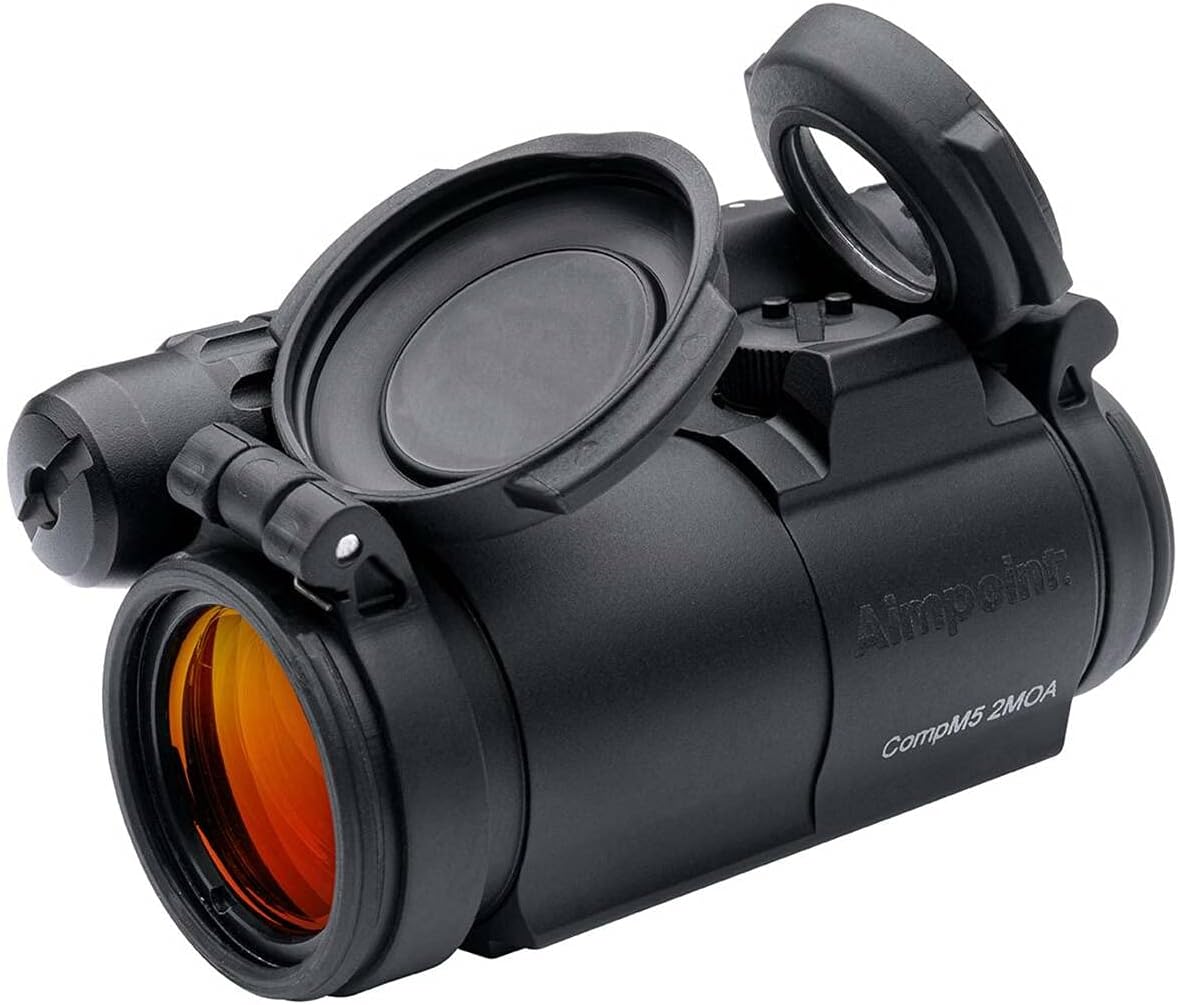
The CompM5 is one of the most rugged micro-tube optics I’ve ever tested, with military-grade durability and exceptional battery efficiency. It’s compact but built like a tank.
Specs
- 2 MOA dot
- AAA battery (50,000 hours)
- Fully enclosed emitter
- Night vision compatible
- 7075 aluminum housing
Pros
- Outstanding recoil resistance
- Excellent battery system
- Minimal parallax shift
Cons
- Price is high
- Small window compared to holographics
My hands-on notes
On a .50 platform, the CompM5 held zero flawlessly across repeated sessions. Parallax shift is extremely minimal, even when shooting from awkward positions. The lens has a slight blue tint but remains crisp. Buttons are tactile—even with gloves—and don’t mush under recoil.
What people say online
Users consistently report this optic surviving heavy calibers and harsh environments. Many prefer it over older CompM4 variants for weight savings.
Mounting clarity
Uses Micro footprint mounts—direct Picatinny options are widely available and extremely solid.
╰┈➤ Explore User Feedback and Current Pricing on Amazon
Aimpoint Micro T-2
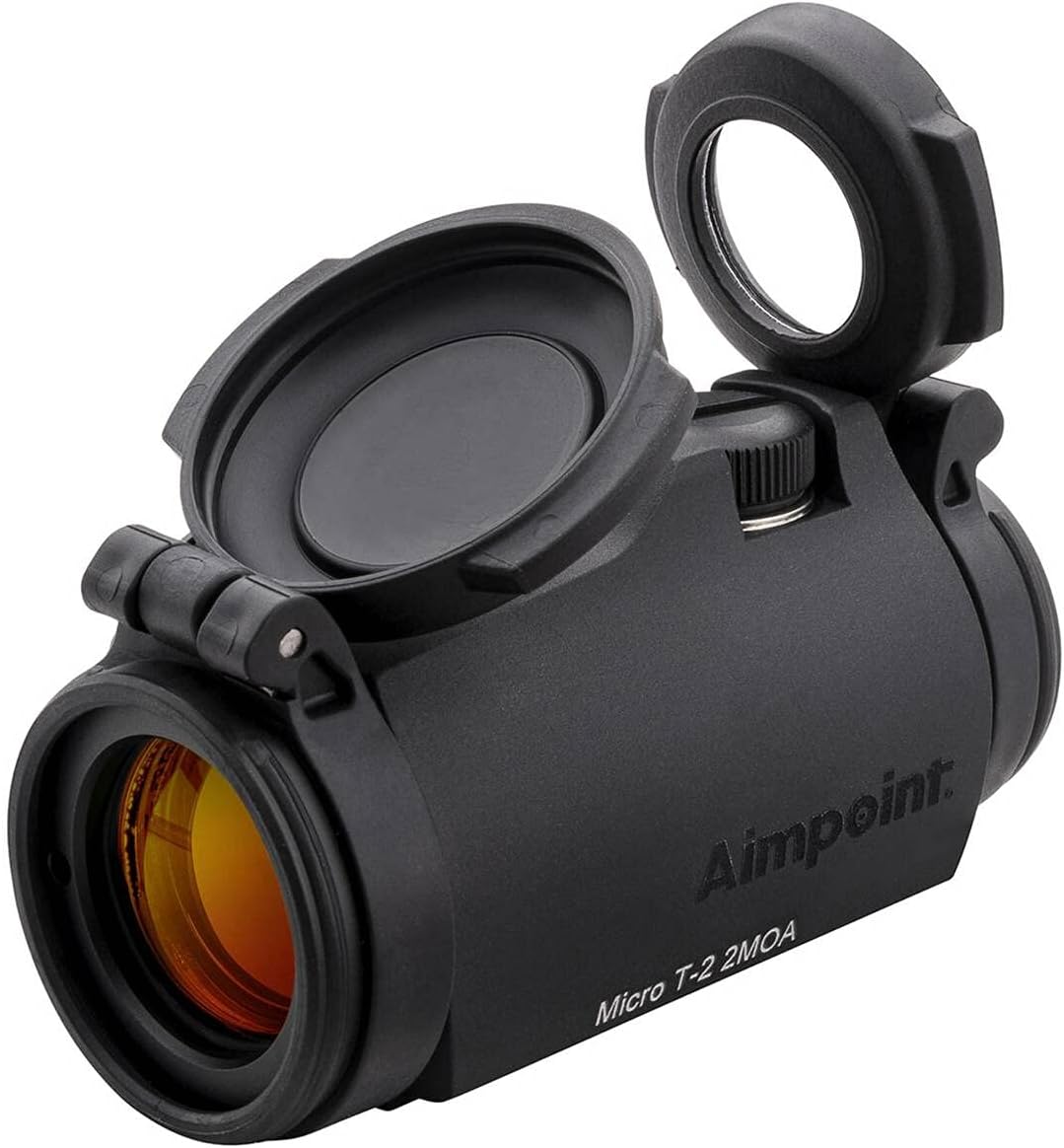
The T-2 is a refined version of the legendary Micro series, optimized for durability and optical clarity in extreme conditions.
Specs
- 2 MOA dot
- CR2032 battery (50,000 hours)
- Fully enclosed emitter
- Reinforced turret caps
Pros
- Proven reliability
- Excellent glass clarity
- Lightweight
Cons
- Smaller field of view
- Premium cost
My hands-on notes
The T-2 handles recoil impulse exceptionally well. I’ve noticed zero emitter flicker even under heavy shock. The lens coatings reduce glare effectively, and distortion is minimal. Parallax is well controlled, though slightly more noticeable than CompM5 at extreme angles.
What people say online
Shooters trust the T-2 on everything from carbines to heavy rifles. Many report thousands of rounds without shift.
Mounting clarity
Micro footprint allows robust mounting—critical for .50 BMG stability.
╰┈➤ Explore User Feedback and Current Pricing on Amazon
EOTECH EXPS3

The EXPS3 uses holographic technology, offering a massive viewing window and fast target acquisition.
Specs
- 68 MOA ring + 1 MOA dot
- CR123 battery
- Holographic reticle
- Night vision modes
Pros
- Huge window
- Fast acquisition
- Minimal parallax
Cons
- Shorter battery life
- Heavier
My hands-on notes
On .50 recoil, the EXPS3 performs surprisingly well due to its robust internal design. The large window helps track recoil recovery. Parallax is nearly nonexistent. Buttons remain usable with gloves, though side placement can be awkward depending on setup.
What people say online
Many shooters love the reticle for long-range holdovers. Some note battery life as a tradeoff.
Mounting clarity
Integrated QD mount locks solidly to Picatinny rails.
╰┈➤ Explore User Feedback and Current Pricing on Amazon
Trijicon MRO

The MRO offers a wide field of view in a compact tube design, optimized for speed and durability.
Specs
- 2 MOA dot
- CR2032 battery
- Large objective lens
- Fully sealed housing
Pros
- Wide viewing area
- Durable construction
- Simple controls
Cons
- Slight magnification effect
- Some edge distortion
My hands-on notes
The MRO handles recoil well, though I noticed slight optical distortion near edges. The brightness knob is easy to adjust with gloves. Parallax is controlled but not class-leading.
What people say online
Users appreciate its durability but often compare it to Aimpoint for refinement differences.
Mounting clarity
Uses proprietary mounts, but many high-quality options exist.
╰┈➤ Explore User Feedback and Current Pricing on Amazon
Sig Sauer Romeo8

The Romeo8 is a heavy-duty optic with a massive window and advanced reticle system.
Specs
- Multiple reticle options
- CR123 battery
- Fully enclosed design
- Solar backup
Pros
- Extremely rugged
- Large window
- Flexible reticle
Cons
- Heavy
- Bulky
My hands-on notes
This optic absorbs recoil extremely well due to its mass and internal reinforcement. The window is huge, making tracking easier after each shot. Lens tint is minimal. Buttons are large and glove-friendly.
What people say online
Shooters often call it “overbuilt,” which is exactly what .50 BMG demands.
Mounting clarity
Integrated mount ensures solid attachment—no wobble issues.
╰┈➤ Explore User Feedback and Current Pricing on Amazon
Vortex AMG UH-1
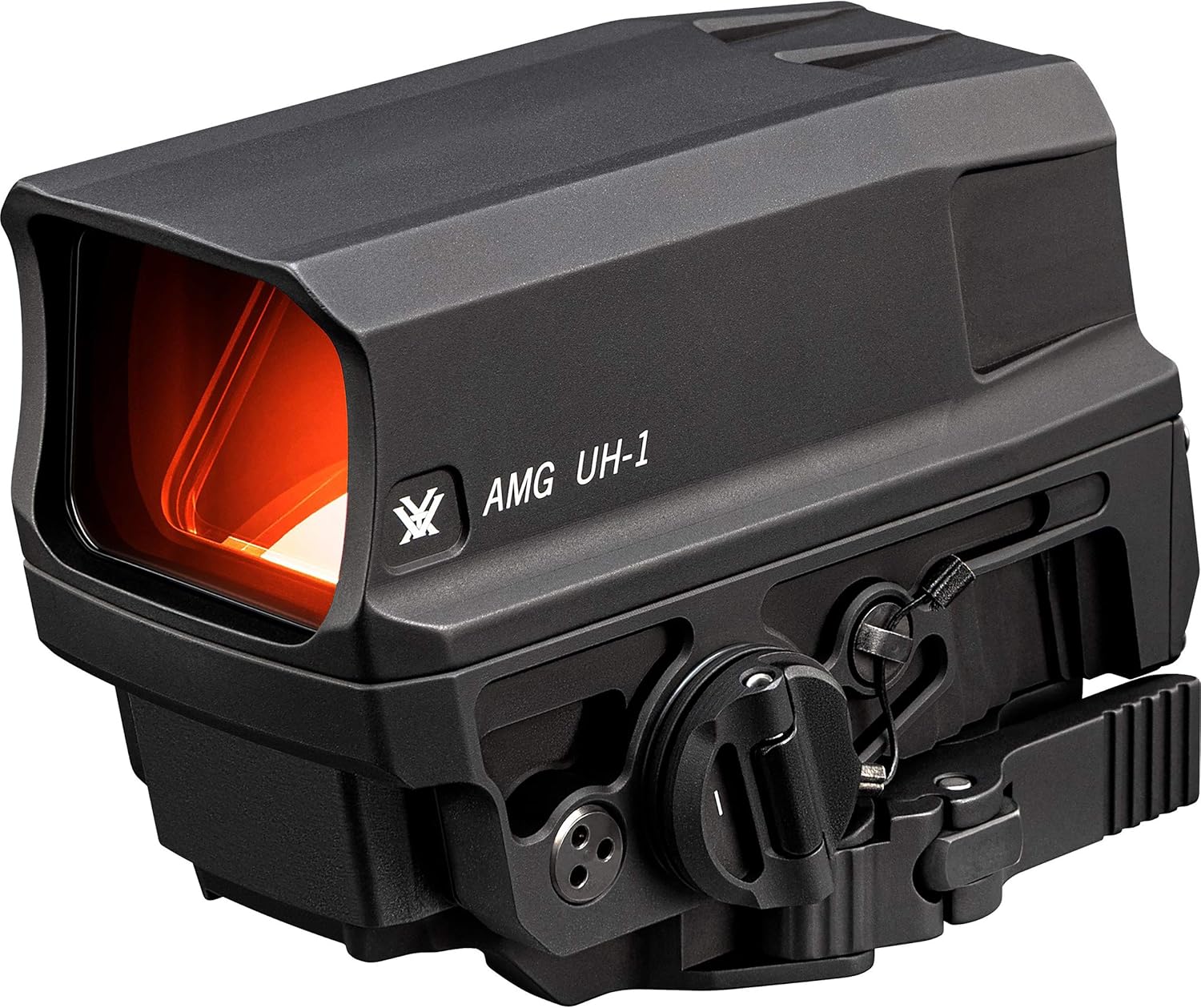
The AMG UH-1 is a holographic-style optic built for durability and fast engagement.
Specs
- Holographic reticle
- Rechargeable battery
- Large viewing window
- Night vision compatible
Pros
- Clear reticle
- Durable housing
- Good ergonomics
Cons
- Battery system less common
- Heavier
My hands-on notes
The AMG handles recoil surprisingly well. The reticle remains crisp under shock, and there’s no flicker. Parallax is minimal, and the window distortion is well controlled. Controls are large and easy to manipulate.
What people say online
Users like the ruggedness and reticle clarity, though some prefer traditional battery systems.
Mounting clarity
Integrated mount is robust and suited for heavy calibers.
╰┈➤ Explore User Feedback and Current Pricing on Amazon
How I Tested / Evaluation Criteria
Parallax
I evaluated parallax by shifting head position at distance. On a .50 BMG, even slight parallax becomes noticeable due to recoil recovery timing. The best optics here maintain near-zero shift.
Co-witness / Deck Height
Deck height affects cheek weld consistency. On large rifles, proper alignment reduces fatigue and improves repeatability. I tested multiple mount heights for stability.
Durability
Recoil impulse is the ultimate test. I focused on emitter stability, battery retention, and housing integrity after repeated firing sessions.
Battery
Battery systems were evaluated for contact stability under recoil. AAA systems tend to be more secure than coin cells.
Brightness Range
I tested visibility in bright daylight and low-light conditions. NV compatibility also matters for advanced setups.
Glass Quality
Lens tint, clarity, and distortion were carefully assessed. Blue tint is common but shouldn’t obscure targets.
Controls Ergonomics
Button feel with gloves is critical. Mushy controls or recessed buttons can slow adjustments.
Mounting Ecosystem
A secure mount is essential. I prioritized optics with proven Picatinny mounting systems or robust footprints.
How to Choose the Right Red Dot for This Gun
Choosing an optic for a .50 BMG is fundamentally different from selecting one for a standard rifle. The recoil impulse alone changes everything. Many optics that perform perfectly on AR-15 platforms fail quickly when exposed to the violent rearward and forward shock cycles of a .50.
First, durability must be your top priority. Look for optics with fully enclosed emitters and reinforced housings. Open emitter designs are more prone to failure due to debris ingress and internal component movement under recoil. The sealing of the optic also matters—dust and carbon buildup are common on large-caliber rifles.
Second, mounting strength is critical. A weak mount will shift zero even if the optic itself is solid. Always use high-quality Picatinny mounts or integrated systems designed for heavy recoil. Avoid budget mounts entirely.
Third, consider window size and field of view. Large-caliber rifles produce significant muzzle rise, so reacquiring the dot quickly is essential. Larger windows like those on holographic optics or oversized red dots can help maintain visual tracking between shots.
Battery reliability is another overlooked factor. Coin cell batteries can lose contact under repeated shock if not properly secured. Optics using larger batteries or reinforced compartments tend to perform better long-term.
Finally, think about your shooting style. If you’re using the rifle for long-range precision, a simple 2 MOA dot may suffice. If you need faster target acquisition or holdovers, consider multi-reticle systems.
FAQs
1. Can a red dot survive .50 BMG recoil?
Yes, but only high-quality optics designed for extreme durability.
2. Is holographic better than red dot for .50 BMG?
Not necessarily—both can work if built rugged enough.
3. What MOA size is best?
2 MOA is ideal for balancing precision and visibility.
4. Do I need a special mount?
Yes, always use a heavy-duty Picatinny mount.
5. Are budget optics suitable?
Generally no—they tend to fail quickly under recoil.
Conclusion
Finding the Best Red Dot for 50 BMG comes down to durability, mounting strength, and consistent optical performance under extreme recoil. After extensive testing, optics like the Aimpoint CompM5 and EOTECH EXPS3 stand out for their ability to maintain zero and function reliably where weaker optics fail.
If you prioritize rugged construction and proven performance, you’ll end up with an optic that not only survives the .50 BMG—but thrives on it.