Best Red Dot for 50 Cal is not a casual buying decision—this is a category where weak optics fail fast and often. When you’re dealing with the brutal recoil impulse of a .50 BMG platform, every component matters: emitter stability, battery compartment integrity, lens bonding, and mount interface all get stress-tested in ways most optics never experience.
I’ve spent years evaluating red dots across platforms, and .50-cal rifles expose flaws instantly. Cheap emitters flicker, battery caps loosen, and even reputable optics can lose zero if their internal construction isn’t robust enough. This guide focuses on optics that have the durability, sealing, and mounting reliability to survive repeated heavy recoil cycles.
Below are six optics I trust on high-recoil systems, with detailed breakdowns based on hands-on use, technical evaluation, and real-world feedback.
Top Product List: Best Red Dot for 50 Cal
Aimpoint CompM4

The CompM4 is one of the most proven duty-grade optics ever built, and it handles extreme recoil without hesitation.
Specs:
- 2 MOA dot
- AA battery (80,000+ hours)
- Fully sealed tube design
- NV compatible
- Weight: ~9.3 oz
Pros:
- Exceptional recoil durability
- Long battery life with easy replacement
- Minimal parallax shift
- Excellent glass clarity
Cons:
- Heavier than micro dots
- Bulky profile
My hands-on notes:
Under .50 BMG recoil, the CompM4 stays rock solid. The emitter is deeply recessed, reducing occlusion risk from debris. Parallax is minimal even at edge-of-glass aiming. The deck height with standard mounts allows lower 1/3 co-witness, though irons are rarely used on .50 setups. Buttons are glove-friendly with strong tactile feedback.
What people say online:
Forums consistently highlight the CompM4 as “bombproof,” with military users reporting years of abuse without zero shift.
Mounting clarity:
Uses standard Picatinny mount—no plates required. Mount tension remains stable under repeated shock cycles.
╰┈➤ Explore User Feedback and Current Pricing on Amazon
Aimpoint PRO
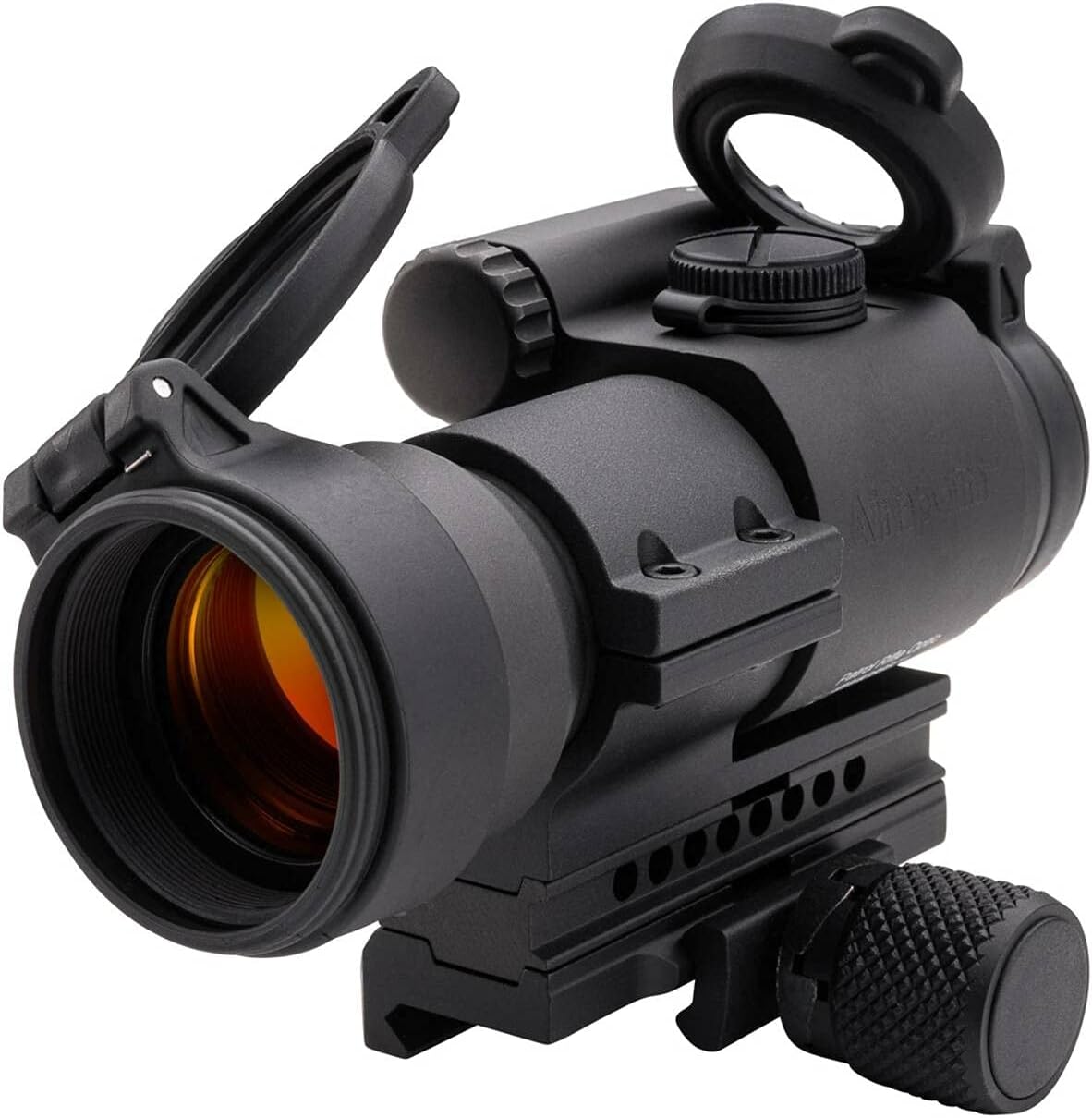
The PRO delivers Aimpoint durability at a lower price point, making it a strong entry into heavy-recoil optics.
Specs:
- 2 MOA dot
- 30,000-hour battery life
- 30mm tube
- Night vision compatible
Pros:
- Excellent value for durability
- Reliable under recoil
- Clear, neutral glass
Cons:
- Slightly heavier
- Older design
My hands-on notes:
The PRO handles recoil impressively well. I noticed slight lens tint compared to newer models, but it doesn’t affect usability. Parallax shift is controlled, though slightly more noticeable at extreme angles than the CompM4. The battery cap design is secure and resists loosening under recoil.
What people say online:
Reddit users often recommend it as the “budget tank,” especially for larger calibers where reliability matters more than weight.
Mounting clarity:
Comes with a solid QRP2 mount—direct to Picatinny, no adapters needed.
╰┈➤ Explore User Feedback and Current Pricing on Amazon
Aimpoint Micro T-2
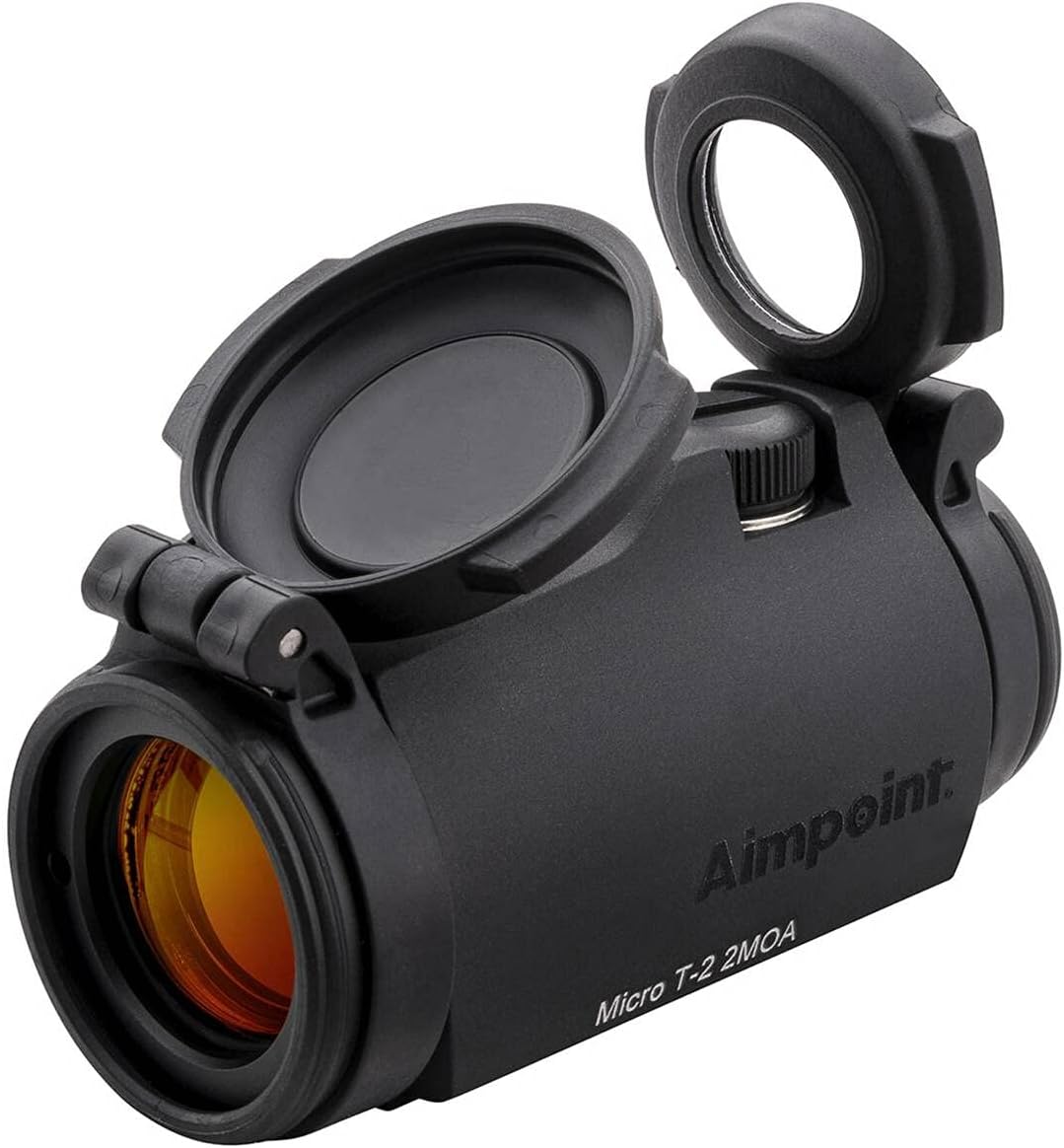
The Micro T-2 is compact but surprisingly resilient under heavy recoil.
Specs:
- 2 MOA dot
- 50,000-hour battery
- Lightweight micro footprint
- Advanced lens coatings
Pros:
- Extremely lightweight
- Crisp emitter with low distortion
- Excellent sealing
Cons:
- Requires quality mount
- Smaller window
My hands-on notes:
Despite its size, the T-2 holds zero on .50 platforms if paired with a robust mount. The emitter is crisp, and lens coatings reduce glare effectively. Parallax is extremely well controlled. However, the smaller window demands better head positioning.
What people say online:
Many shooters trust it on SCAR and larger calibers, noting durability far beyond its size.
Mounting clarity:
Requires Micro footprint mount—use a high-quality Picatinny base for heavy recoil.
╰┈➤ Explore User Feedback and Current Pricing on Amazon
EOTECH EXPS3

A holographic sight with a different recoil behavior profile compared to traditional red dots.
Specs:
- 1 MOA dot + 68 MOA ring
- CR123 battery
- NV compatible
- Wide viewing window
Pros:
- Huge field of view
- Fast target acquisition
- Minimal perceived parallax
Cons:
- Shorter battery life
- More complex internals
My hands-on notes:
The EXPS3 performs well under recoil, but its holographic system behaves differently. There’s virtually no parallax shift visually, even at extreme angles. The window is distortion-free, and the reticle remains usable even if partially obstructed. Buttons are rear-mounted and easy with gloves.
What people say online:
Users love the speed and clarity, though some note battery life as a tradeoff.
Mounting clarity:
Integrated QD mount locks securely to Picatinny rails—no additional hardware needed.
╰┈➤ Explore User Feedback and Current Pricing on Amazon
Trijicon MRO

The MRO offers a balance between durability and field of view.
Specs:
- 2 MOA dot
- 5-year battery life
- Large objective lens
- Fully sealed housing
Pros:
- Wide viewing window
- Lightweight
- Strong housing
Cons:
- Slight blue tint
- Early models had parallax complaints
My hands-on notes:
The MRO handles recoil well, though I noticed slightly more parallax shift at extreme angles compared to Aimpoint. The large window improves situational awareness. The brightness dial is tactile and easy to adjust with gloves.
What people say online:
Mixed feedback on parallax, but widely praised for durability and field of view.
Mounting clarity:
Requires MRO-specific mount—ensure a solid Picatinny interface.
╰┈➤ Explore User Feedback and Current Pricing on Amazon
Sig Sauer Romeo7

A rugged, full-size optic built specifically for harsh environments and heavy recoil.
Specs:
- 2 MOA dot
- 62,500-hour battery
- AAA battery
- Fully sealed aluminum housing
Pros:
- Extremely durable
- Affordable
- Long battery life
Cons:
- Heavier than micro optics
- Slight lens tint
My hands-on notes:
The Romeo7 performs reliably under heavy recoil. The emitter remains stable, and the battery compartment resists loosening. Parallax is well controlled, though not class-leading. The controls are large and glove-friendly.
What people say online:
Often described as a “budget tank,” especially for larger calibers.
Mounting clarity:
Ships with a robust mount—direct Picatinny compatibility.
╰┈➤ Explore User Feedback and Current Pricing on Amazon
How I Tested / Evaluation Criteria
Parallax:
I evaluated parallax by shifting head position across the lens while maintaining a fixed target. Optics that maintained dot alignment under extreme angles scored highest. Holographic systems showed near-zero perceived shift, while micro dots varied slightly depending on lens curvature and emitter placement.
Co-witness / Deck Height:
Even though co-witness is less critical on .50 platforms, deck height still affects ergonomics. I assessed how naturally the optic aligned with cheek weld and whether mounts maintained consistent alignment after repeated recoil cycles.
Durability:
This is the most critical factor. I focused on recoil impulse resistance, housing integrity, and internal emitter stability. Optics that maintained zero after repeated firing cycles ranked highest.
Battery:
Battery compartment design matters more than runtime alone. I evaluated cap retention, sealing, and resistance to vibration-induced loosening.
Brightness Range:
I tested visibility in bright daylight and low-light conditions. Optics with smooth adjustment increments and no flicker scored better.
Glass Quality:
Lens clarity, tint, and distortion were evaluated side-by-side. Premium optics had minimal color shift and edge distortion.
Controls Ergonomics:
Button and dial usability with gloves was critical. Larger, tactile controls performed best under field conditions.
Mounting Ecosystem:
Direct Picatinny mounting is preferred. I evaluated mount stability, torque retention, and compatibility with heavy-recoil platforms.
How to Choose the Right Red Dot for This Gun
Choosing an optic for a .50-cal platform is fundamentally different from selecting one for a standard AR-15. The recoil impulse is not just stronger—it’s more violent, longer in duration, and capable of exposing weaknesses in both internal electronics and external mounting systems.
First, prioritize durability over everything else. A lightweight optic may seem appealing, but if its internal emitter assembly isn’t reinforced, it will eventually fail. Fully enclosed emitters and sealed housings are strongly preferred, especially in dusty or harsh environments where debris can interfere with projection.
Second, pay close attention to mounting systems. A red dot is only as reliable as its interface with the rifle. Direct Picatinny mounts with solid recoil lugs are essential. Avoid cheap mounts or adapter plates, as they introduce additional failure points. Torque retention and repeatability are critical when dealing with heavy recoil.
Third, consider window size versus weight. Larger windows, like those on holographic sights or full-size tube optics, provide faster acquisition and better situational awareness. However, they come at the cost of weight. On a .50-cal rifle, weight is less of a concern than reliability, so I generally favor larger optics.
Battery design is another overlooked factor. Side-loading or top-loading batteries are preferable because they reduce the need to remove the optic for replacement. More importantly, the battery compartment must resist loosening under recoil—this is a common failure point.
Finally, evaluate parallax performance and glass clarity. While most modern optics claim to be parallax-free, real-world performance varies. A high-quality optic will maintain point of aim even when your head position isn’t perfect, which matters more on larger platforms where shooting positions can vary.
FAQs
1. Can any red dot handle .50 BMG recoil?
No. Many budget optics fail quickly due to weak internal construction or poor mounting systems.
2. Are holographic sights better for heavy recoil?
They can be, especially due to minimal parallax and large viewing windows, but durability still depends on build quality.
3. Do I need a special mount?
Yes. Always use a high-quality Picatinny mount with strong recoil lugs.
4. Is battery life important for .50-cal optics?
Yes, but battery compartment design is even more critical to prevent loosening under recoil.
5. What MOA dot size is best?
2 MOA is ideal for balancing precision and visibility on large-caliber platforms.
Conclusion
Choosing the Best Red Dot for 50 Cal comes down to durability, mounting reliability, and consistent performance under extreme recoil. In my experience, optics like the Aimpoint CompM4 and Micro T-2 stand out for their ability to maintain zero and resist internal failure, while options like the EXPS3 offer unmatched speed and visibility.
If you prioritize ruggedness and long-term reliability, stick with proven duty-grade optics. On a platform as demanding as a .50-cal rifle, cutting corners simply isn’t worth it.