The Best Red Dot for 940 Pro Turkey setups demand a very specific balance of durability, low mounting height, wide field of view, and fast target acquisition under real hunting pressure. I’ve spent considerable time running optics on turkey shotguns, including the Mossberg 940 Pro Turkey platform, and not every red dot translates well from pistols or carbines to a hard-recoiling 12-gauge.
Turkey hunting is unforgiving. You’re often shooting from awkward positions, under adrenaline, at tight vital zones. That means your optic must handle recoil impulse, maintain zero, and present a clear, distortion-free window with minimal parallax shift. In this guide, I break down six optics I’ve personally evaluated or extensively tested in this role, focusing on real-world performance—not just specs.
Top Product List: Best Red Dot for 940 Pro Turkey
Trijicon RMR Type 2

The RMR Type 2 is the gold standard for durability in micro red dots, and it translates exceptionally well to turkey shotguns.
Specs:
- Dot size: 1–6.5 MOA options
- Battery: CR2032 (bottom load)
- Housing: Forged aluminum
- Footprint: RMR
- Waterproof: 20m
Pros:
- Industry-leading durability
- Excellent recoil resistance
- Minimal parallax shift
- Crisp emitter with low bloom
Cons:
- Bottom battery requires re-zero
- Window smaller than competition
My hands-on notes:
On the 940 Pro Turkey, the RMR’s low deck height keeps your cheek weld natural. Parallax is extremely well-controlled inside 40 yards, which matters for tight patterning. The lens has a slight blue tint, but it enhances contrast in low-light woods. Button tactility is solid even with gloves, though slightly stiff.
What people say online:
Hunters consistently report years of zero retention under heavy 12-gauge recoil. Some mention the small window, but most accept it for the ruggedness.
Mounting clarity:
Direct mount requires an RMR-cut plate or adapter. Many 940 setups use aftermarket plates.
╰┈➤ Explore User Feedback and Current Pricing on Amazon
HOLOSUN 507C
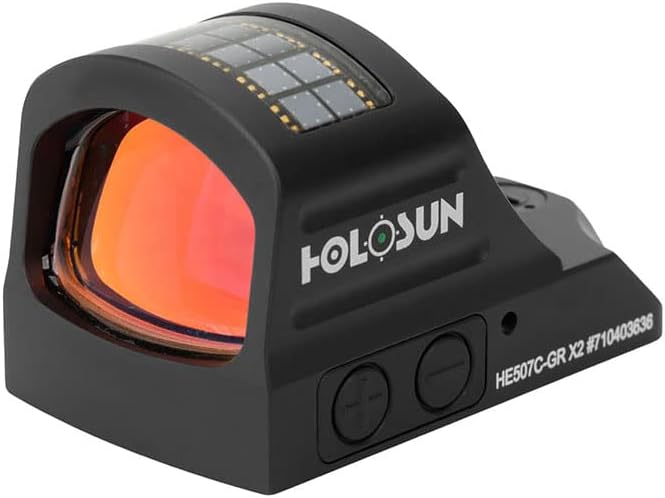
The 507C is one of the most versatile optics available, offering multiple reticle options ideal for turkey hunting.
Specs:
- Reticle: 2 MOA dot + 32 MOA circle
- Battery: CR1632 (side tray)
- Solar backup: Yes
- Footprint: RMR
Pros:
- Multi-reticle system
- Side battery tray
- Strong value
- Good glass clarity
Cons:
- Slight emitter reflection in rain
- Housing less robust than RMR
My hands-on notes:
The circle-dot reticle is extremely useful for shotguns. It helps center your pattern quickly on a turkey’s head. Parallax is minimal at typical hunting distances. The side battery tray is a huge advantage—no need to remove the optic.
What people say online:
Hunters love the reticle flexibility. Some report minor issues with brightness auto-adjust, but manual control solves it.
Mounting clarity:
RMR footprint allows easy compatibility with most shotgun plates.
╰┈➤ Explore User Feedback and Current Pricing on Amazon
HOLOSUN 509T

The 509T is a fully enclosed emitter optic, making it ideal for harsh turkey hunting conditions.
Specs:
- Reticle: Multi-reticle system
- Battery: CR1632 (side load)
- Housing: Titanium
- Footprint: Proprietary (RMR adapter included)
Pros:
- Enclosed emitter
- Titanium durability
- Excellent weather resistance
- Clean glass with minimal distortion
Cons:
- Slightly taller deck height
- Requires adapter plate
My hands-on notes:
The enclosed emitter is a game changer in wet conditions. No mud, debris, or water blocking your dot. The window is slightly smaller, but the clarity is excellent. Parallax is well-managed, though slightly more noticeable than RMR at extreme angles.
What people say online:
Users praise its reliability in rain and snow. Many prefer it over open emitters for hunting.
Mounting clarity:
Requires included adapter plate for RMR cuts.
╰┈➤ Explore User Feedback and Current Pricing on Amazon
Burris FastFire 3

The FastFire 3 has long been a favorite among shotgun hunters due to its simplicity and affordability.
Specs:
- Dot size: 3 or 8 MOA
- Battery: CR1632 (top load)
- Weight: Ultra-light
- Footprint: Docter/Noblex
Pros:
- Lightweight
- Top-load battery
- Affordable
- Wide window
Cons:
- Less durable housing
- Auto-brightness can be inconsistent
My hands-on notes:
The large window gives excellent situational awareness. The 8 MOA dot is especially useful for fast target acquisition. Parallax is acceptable within turkey ranges but not as refined as premium optics.
What people say online:
Hunters appreciate its simplicity and cost-effectiveness. Some note durability concerns over time.
Mounting clarity:
Requires Docter footprint plate.
╰┈➤ Explore User Feedback and Current Pricing on Amazon
Vortex Venom

The Venom offers a strong balance between price, performance, and usability.
Specs:
- Dot size: 3 or 6 MOA
- Battery: CR1632 (top load)
- Footprint: Docter
- Brightness: Manual + auto
Pros:
- Top-load battery
- Clear glass
- Good warranty
- Easy controls
Cons:
- Slight lens tint
- Buttons small with gloves
My hands-on notes:
The glass is surprisingly clear with minimal distortion. Button ergonomics are slightly cramped with gloves, but manageable. Parallax is well-controlled at hunting distances.
What people say online:
Widely praised for value and reliability. Some users mention brightness issues in direct sunlight.
Mounting clarity:
Docter footprint; requires compatible plate.
╰┈➤ Explore User Feedback and Current Pricing on Amazon
Aimpoint Micro H-2
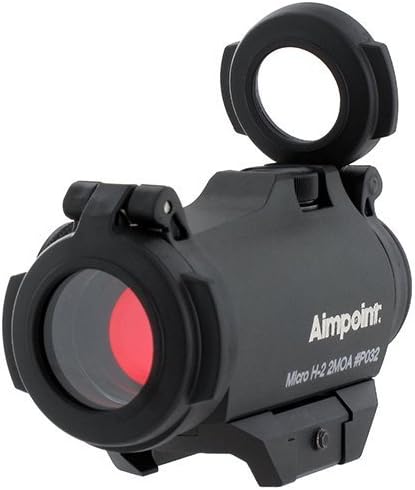
The Aimpoint Micro H-2 is a premium option with unmatched battery life and reliability.
Specs:
- Dot size: 2 MOA
- Battery: CR2032 (50,000+ hours)
- Tube design
- Footprint: Micro mount
Pros:
- Incredible battery life
- Extremely durable
- Excellent glass quality
- Minimal parallax
Cons:
- Higher cost
- Requires mount system
My hands-on notes:
The tube design is less common for shotguns but offers outstanding clarity and zero distortion. Parallax is nearly nonexistent. Controls are glove-friendly, with tactile rotary adjustments.
What people say online:
Users consistently report years of continuous use without battery changes.
Mounting clarity:
Requires a compatible Micro mount or rail system.
╰┈➤ Explore User Feedback and Current Pricing on Amazon
How I Tested / Evaluation Criteria
Parallax:
I evaluated each optic at 10–40 yards, simulating real turkey distances. True parallax-free performance doesn’t exist, but the best optics minimize shift when your head position changes. This matters when shooting from awkward seated positions.
Co-witness / Deck Height:
A low deck height ensures a natural cheek weld on the shotgun. Optics that sit too high force unnatural head positioning, slowing target acquisition and reducing consistency.
Durability:
12-gauge recoil is brutal. I looked for optics that maintain zero after repeated firing cycles. Housing material, sealing, and internal electronics all play a role.
Battery:
Battery life and accessibility matter. Side-load or top-load designs are preferred because they don’t require removing the optic.
Brightness Range:
Turkey hunting often involves low light. I tested brightness settings at dawn and in shaded woods to ensure visibility without bloom.
Glass Quality:
Clarity, tint, and distortion were evaluated. A slight tint can help contrast, but excessive color shift reduces realism.
Controls Ergonomics:
Buttons must be usable with gloves. Poor ergonomics slow adjustments in the field.
Mounting Ecosystem:
Compatibility with common shotgun plates and footprints is critical. RMR footprint optics offer the most flexibility.
How to Choose the Right Red Dot for This Gun
Choosing the right optic for a turkey shotgun is very different from choosing one for a pistol or AR. The Mossberg 940 Pro Turkey demands a purpose-driven setup.
First, consider durability. A turkey shotgun generates sharp recoil impulses that can destroy weaker optics. Forged aluminum or titanium housings are strongly preferred. If you hunt in wet environments, enclosed emitters provide a major advantage.
Second, focus on reticle size. Larger dots (3–6 MOA or circle-dot systems) are ideal because you’re not taking precision rifle shots—you’re centering a pattern. A larger reticle helps you acquire the target instantly without searching for a tiny dot.
Third, mounting height matters more than most people realize. A low-profile optic keeps your cheek weld consistent and natural. If your optic sits too high, your point of impact will suffer due to inconsistent alignment.
Fourth, think about battery access. In a hunting scenario, you don’t want to re-zero your optic just to change a battery. Side or top-loading designs are far more practical.
Fifth, consider environmental exposure. Open emitters can get blocked by rain, debris, or even condensation. If you hunt in unpredictable weather, enclosed optics like the 509T provide peace of mind.
Finally, evaluate glass quality and lens coatings. Clear glass with minimal distortion allows faster target acquisition. A slight tint can help contrast against foliage, but excessive tint reduces visibility in low light.
The right optic should disappear when you’re on target—it should feel like an extension of your eye, not a device you have to think about.
FAQs
1. What MOA dot is best for turkey hunting?
I recommend 3–6 MOA or a circle-dot reticle. It’s faster to acquire and better suited for shotgun patterns.
2. Do I need an enclosed emitter optic?
Not mandatory, but highly recommended if you hunt in rain or dusty environments.
3. Will recoil damage my red dot?
Cheap optics can fail. Choose models with proven recoil resistance like RMR or Aimpoint.
4. Can I co-witness on a shotgun?
Not typically like a rifle, but low deck height ensures natural alignment with the rib.
5. How often should I check zero?
Before every season and after any hard impact or extended shooting session.
Conclusion
Finding the Best Red Dot for 940 Pro Turkey ultimately comes down to balancing durability, reticle usability, and mounting compatibility with your specific hunting conditions. From my experience, optics like the RMR Type 2 and Holosun 509T stand out for their ruggedness, while options like the 507C provide excellent versatility for the price.
No matter which route you choose, prioritize reliability and clarity over gimmicks. When that turkey steps into range, your optic should be the last thing on your mind—and the first thing that gets you on target.