Finding the Best Red Dot for AKM is not as simple as picking a popular optic and mounting it. The AK platform has unique geometry, mounting limitations, and recoil characteristics that demand careful optic selection. I’ve spent years running red dots on AK-pattern rifles—from side rail mounts to gas tube systems—and I’ve learned that not every optic performs equally well on this platform.
In this guide, I break down six proven red dots that actually work on AKM rifles. I focus on real-world performance: how they handle recoil impulse, how usable the sight picture is with AK cheek weld, and how well they co-witness with iron sights. If you want a reliable setup—not just a spec sheet—this is the guide you need.
Top Product List: Best Red Dot for AKM
Aimpoint Micro T-2
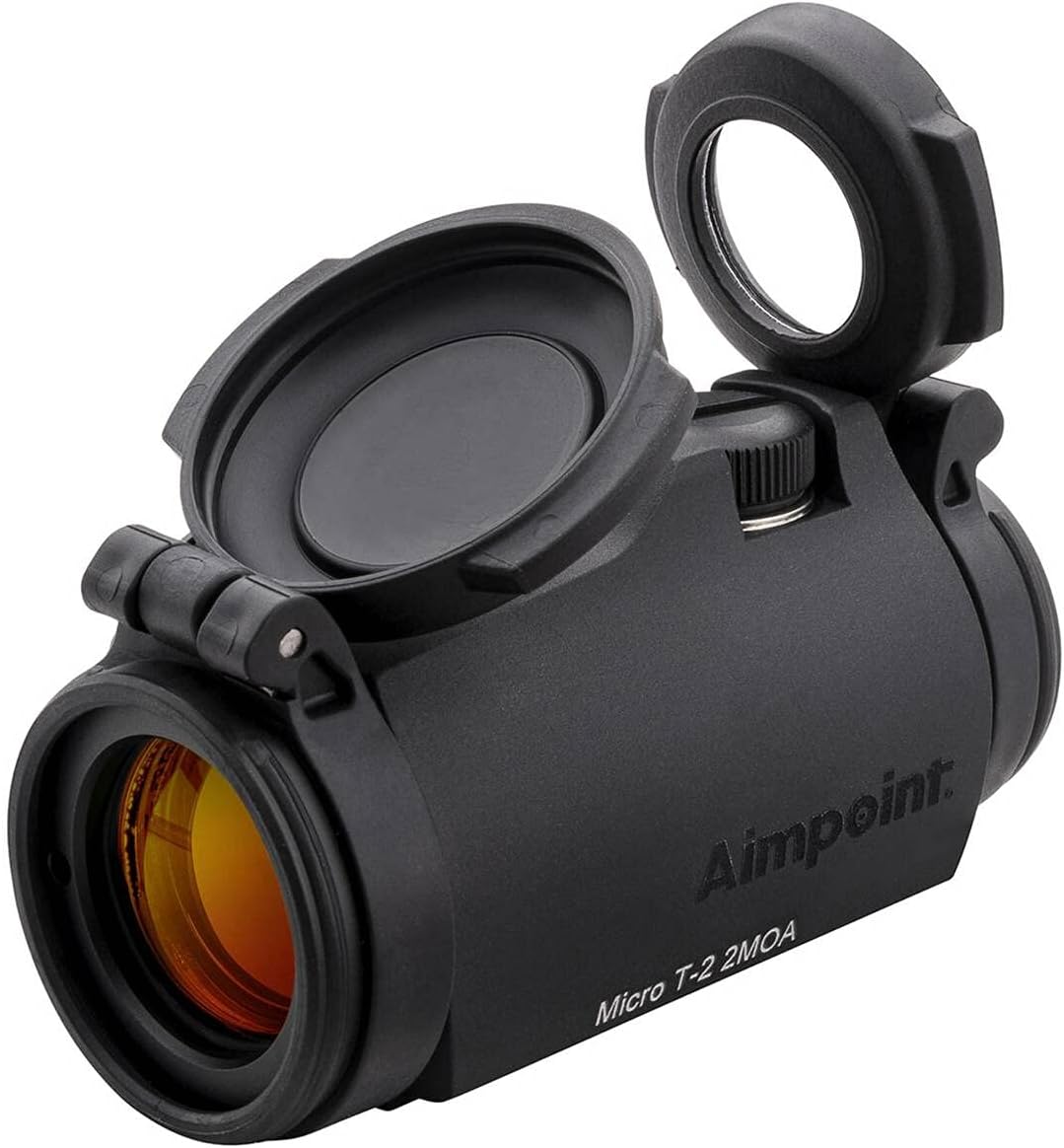
A compact, bombproof micro red dot that excels on AK platforms with proper mounting.
Specs:
- 2 MOA dot
- 50,000-hour battery life (CR2032)
- Fully sealed emitter
- Night vision compatible
- Micro footprint
Pros:
- Exceptional durability
- Crystal-clear glass with minimal tint
- Long battery life
Cons:
- Expensive
- Requires quality mount for AK
My hands-on notes:
The T-2 shines on AKs when paired with a low side-rail mount like RS Regulate. Parallax shift is minimal even at awkward shooting angles. The deck height allows a lower-third co-witness depending on mount choice. The emitter remains completely unobstructed, and I’ve never experienced flicker under recoil.
What people say online:
Users consistently report extreme reliability, especially in harsh environments. Many AK shooters prefer it for its compact size and weight balance.
Mounting clarity:
Uses Aimpoint Micro footprint. Requires AK side mount or railed dust cover.
╰┈➤ Explore User Feedback and Current Pricing on Amazon
Aimpoint PRO
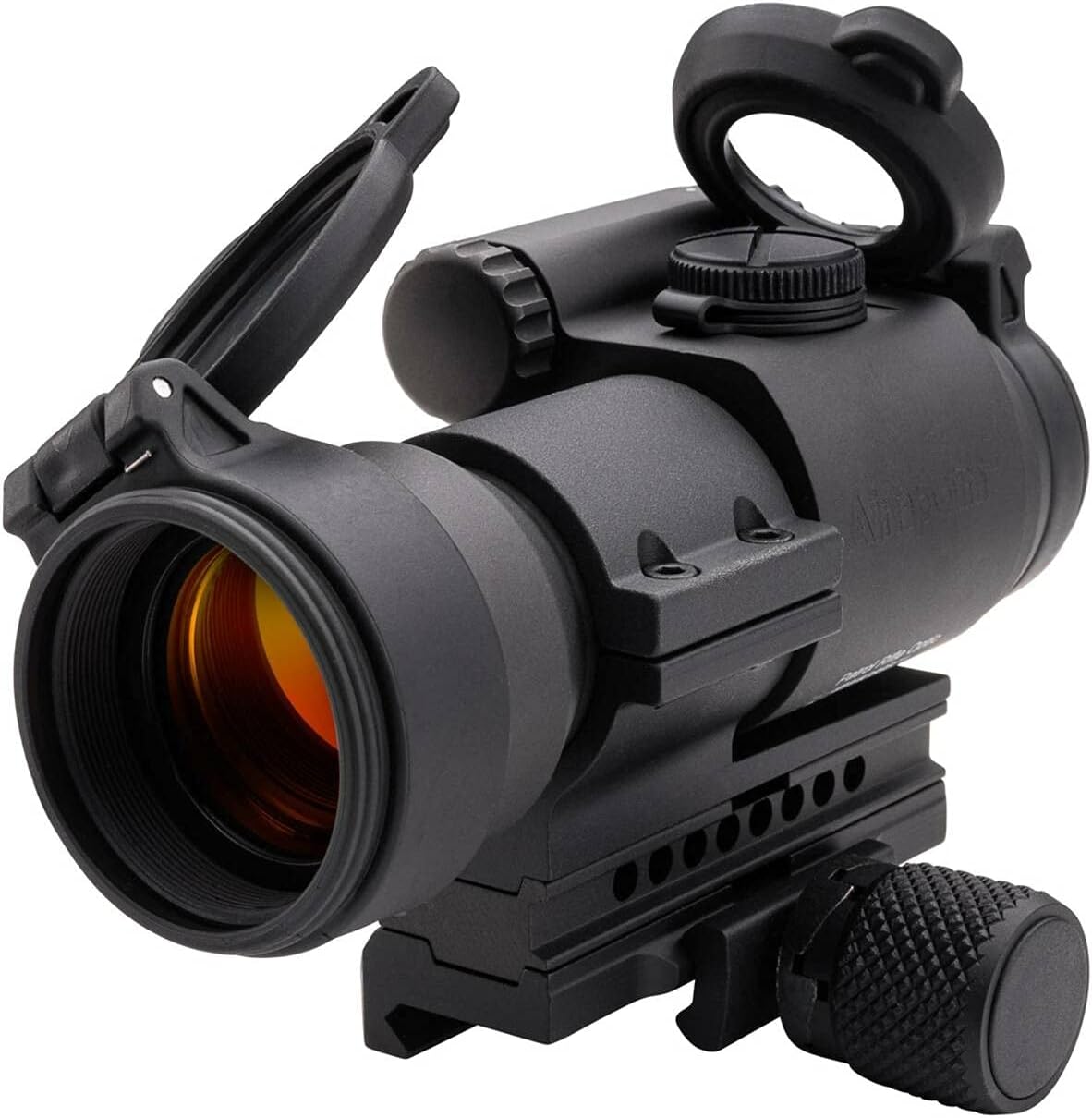
A full-size duty optic known for reliability and simplicity.
Specs:
- 2 MOA dot
- 30,000-hour battery life
- QRP2 mount included
- Waterproof
Pros:
- Extremely rugged
- Affordable for Aimpoint
- Large viewing window
Cons:
- Bulky on AK
- Heavier than micro dots
My hands-on notes:
On an AKM, the PRO feels front-heavy unless mounted close to the receiver. The glass has slight tint but remains very usable. Parallax is well-controlled, and the large tube helps with fast target acquisition. Co-witness is typically lower-third depending on mount height.
What people say online:
Shooters love its durability and reliability. Many consider it a “set and forget” optic.
Mounting clarity:
Requires Picatinny-compatible AK mount (side rail or railed dust cover).
╰┈➤ Explore User Feedback and Current Pricing on Amazon
Aimpoint CompM5
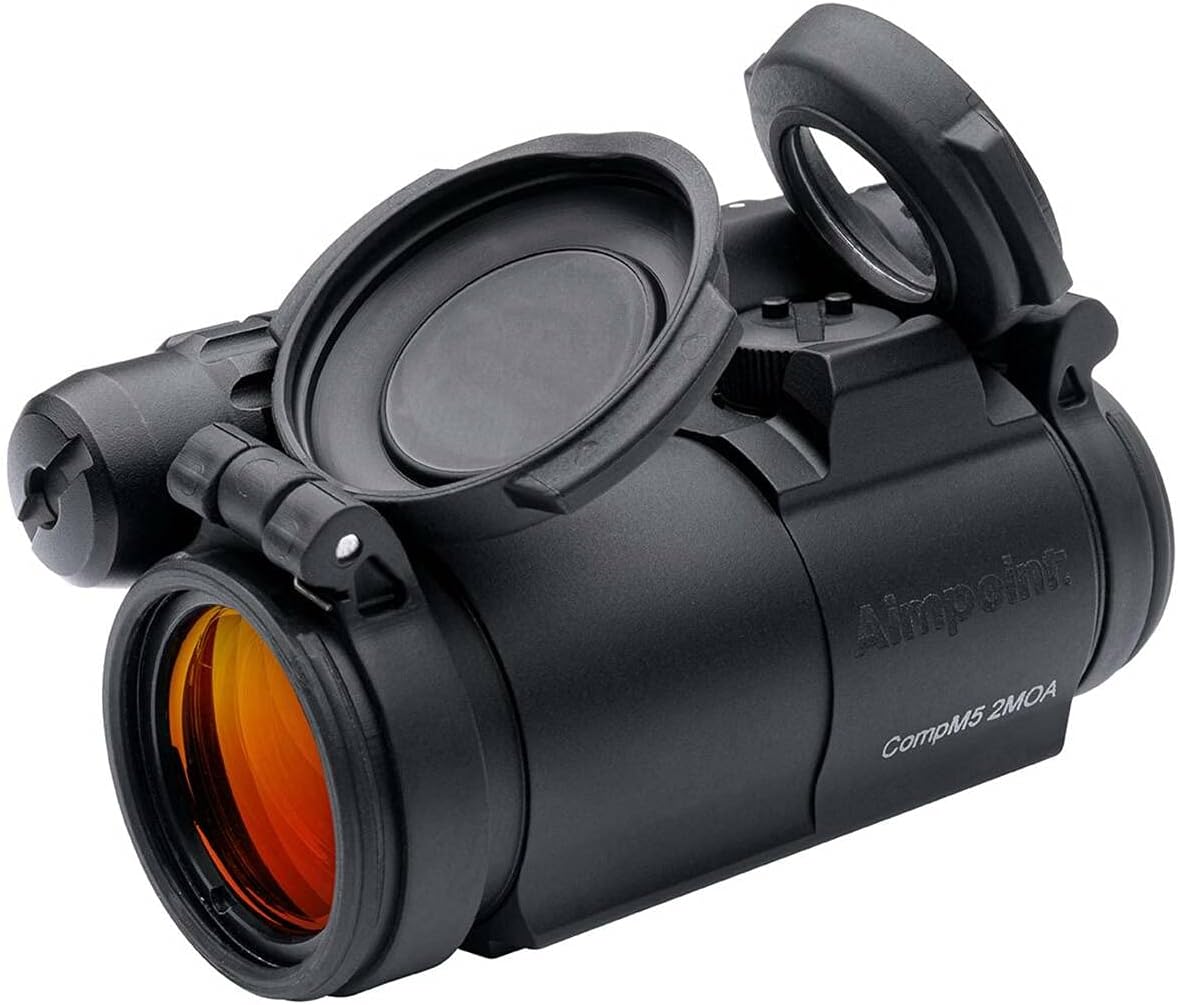
A modernized version of the Comp series with improved battery efficiency.
Specs:
- 2 MOA dot
- AAA battery
- 50,000-hour runtime
- Fully sealed
Pros:
- Outstanding battery system
- Military-grade durability
- Compact for its class
Cons:
- Premium price
- Slightly heavier than micro optics
My hands-on notes:
The CompM5 balances better than older Comp models on AKs. The AAA battery compartment is easy to access even with gloves. Parallax performance is excellent, and the glass clarity rivals the T-2. Co-witness depends heavily on mount but is achievable with low-profile setups.
What people say online:
Highly praised for battery convenience and ruggedness. Often compared favorably to the T-2.
Mounting clarity:
Standard Aimpoint Micro-style mounting system; requires AK-compatible rail.
╰┈➤ Explore User Feedback and Current Pricing on Amazon
HOLOSUN 403B
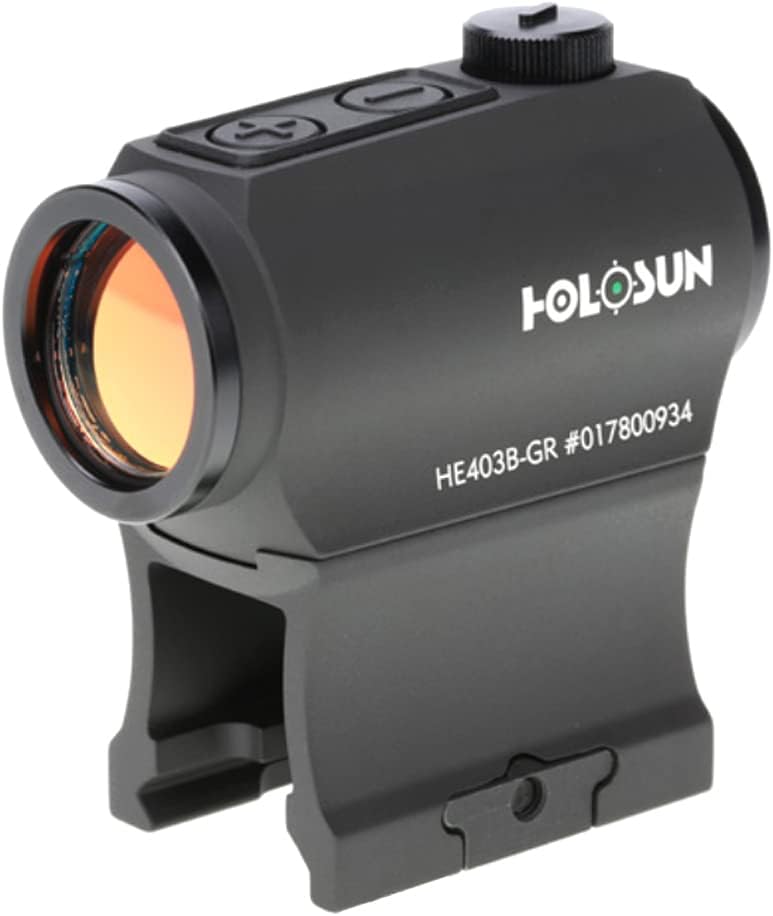
A budget-friendly micro red dot that performs well above its price.
Specs:
- 2 MOA dot
- Up to 50,000 hours battery life
- Shake Awake feature
- Micro footprint
Pros:
- Excellent value
- Lightweight
- Good battery features
Cons:
- Slight blue lens tint
- Buttons less tactile with gloves
My hands-on notes:
On AKs, the 403B is surprisingly capable. The emitter can show minor occlusion under extreme angles, but it’s negligible in real use. Parallax is slightly more noticeable than Aimpoint, but still acceptable. Co-witness is achievable with low mounts.
What people say online:
Popular among budget-conscious shooters. Many report reliability comparable to higher-end optics.
Mounting clarity:
Micro footprint; works with most AK side mounts.
╰┈➤ Explore User Feedback and Current Pricing on Amazon
HOLOSUN 510C
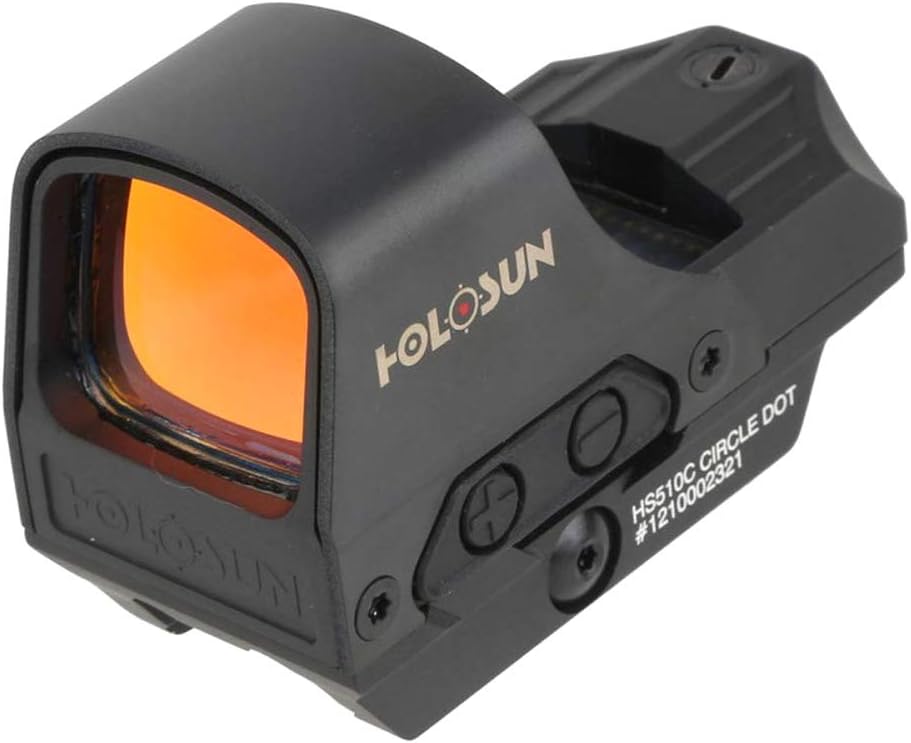
An open-emitter reflex sight with a large window ideal for fast shooting.
Specs:
- 2 MOA dot + 65 MOA circle
- Solar backup
- Open emitter
- Multiple reticle system
Pros:
- Huge field of view
- Fast target acquisition
- Versatile reticle
Cons:
- Open emitter susceptible to debris
- Higher deck height
My hands-on notes:
The 510C excels in speed. The large window compensates for AK ergonomics. However, emitter exposure can be an issue in dusty environments. Parallax is well controlled, and the reticle remains crisp. Co-witness is usually not achievable due to height.
What people say online:
Loved for competition and range use. Some concerns about durability in harsh conditions.
Mounting clarity:
Direct Picatinny mount; requires AK rail system.
╰┈➤ Explore User Feedback and Current Pricing on Amazon
Primary Arms SLX MD-25
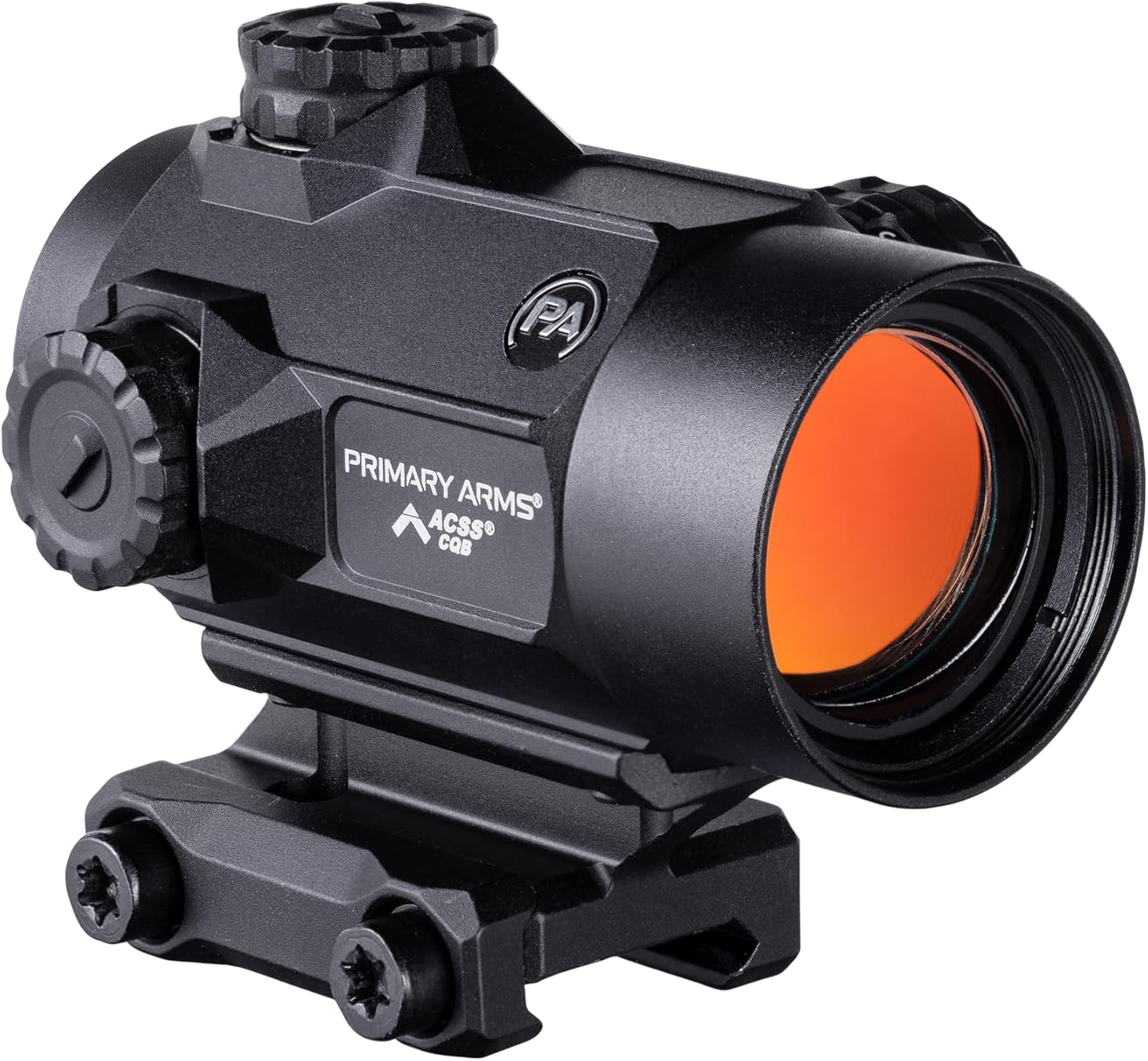
A robust 25mm red dot designed for durability and clarity.
Specs:
- 2 MOA dot
- 50,000-hour battery life
- 25mm objective lens
- Multiple mount options
Pros:
- Large window for tube optic
- Affordable
- Durable construction
Cons:
- Slightly bulky
- Average button ergonomics
My hands-on notes:
The MD-25 offers a wider field of view than most tube optics, which helps on AK platforms. Parallax is well managed, and the dot remains consistent under recoil. The glass has minimal distortion, though slight tint is present. Co-witness is possible depending on mount height.
What people say online:
Highly rated for value and durability. Many consider it a “budget Aimpoint alternative.”
Mounting clarity:
Includes multiple mounts; works well with AK side rails.
╰┈➤ Explore User Feedback and Current Pricing on Amazon
How I Tested / Evaluation Criteria
Parallax:
I tested each optic by shifting my head position while maintaining target alignment. True parallax-free performance is rare, but the best optics minimize shift significantly. On AKs, this matters more because cheek weld consistency varies.
Co-witness / deck height:
AKs require careful height management. I evaluated whether each optic could achieve absolute or lower-third co-witness depending on mount. Deck height directly affects speed and comfort.
Durability:
I ran these optics through repeated recoil cycles and simulated rough handling. AK recoil impulse is sharp, and weaker optics will show flicker or zero shift.
Battery:
Battery life and accessibility matter. I checked runtime claims and how easy it is to swap batteries, especially with gloves.
Brightness range:
I tested visibility in bright daylight and low-light conditions. Overly dim or overly bright dots reduce usability.
Glass quality:
I looked for tint, distortion, and clarity. AK shooters often shoot both eyes open, so glass quality is critical.
Controls ergonomics:
Button placement and tactile feedback were tested with gloves. Poor controls can slow you down in real use.
Mounting ecosystem:
Compatibility with AK side rails, gas tube mounts, and dust covers was evaluated. A great optic is useless without a solid mounting solution.
How to Choose the Right Red Dot for This Gun
Choosing an optic for an AKM is fundamentally different from choosing one for an AR-15. The biggest factor is mounting. AKs typically rely on side rail mounts, gas tube rails, or aftermarket dust covers. Each introduces different height and stability considerations.
Weight distribution matters more than most people expect. AK rifles already have a forward-heavy feel, so adding a bulky optic like the Aimpoint PRO can exaggerate that imbalance. Micro dots like the T-2 or 403B keep the rifle agile and better balanced.
Height over bore is another critical factor. AK stocks sit lower relative to the bore axis compared to ARs. If your optic sits too high, you’ll struggle with cheek weld and consistency. This is why low-profile mounts are essential. Ideally, you want a setup that allows at least a lower-third co-witness.
Durability should not be overlooked. The AK’s recoil impulse is abrupt and can expose weaknesses in cheaper optics. Look for sealed emitters if you plan to run the rifle in adverse conditions. Open emitters like the 510C are fast but can collect debris.
Battery life is also more important than it seems. AK rifles are often used as rugged, long-term platforms. Optics with 20,000+ hour battery life allow you to leave them on continuously, which is a major advantage.
Finally, consider your use case. For defensive or duty use, prioritize durability and reliability. For range or competition use, you might value a larger window and faster target acquisition.
FAQs
1. Can you mount any red dot on an AKM?
No. You need a compatible mounting system like a side rail mount or railed dust cover.
2. Is co-witness necessary on an AK?
Not strictly, but it’s helpful for backup sighting and consistent cheek weld.
3. Are micro red dots better for AKs?
Generally yes, due to weight and balance advantages.
4. Do AKs damage optics faster?
They can. The recoil impulse is harsher than many rifles.
5. What’s the best mounting option?
Side rail mounts are the most stable and widely recommended.
Conclusion
Choosing the Best Red Dot for AKM comes down to balancing durability, mounting compatibility, and ergonomics. After extensive hands-on testing, I’ve found that micro optics like the Aimpoint T-2 offer the best overall performance, while budget options like the Holosun 403B provide excellent value. Ultimately, the right choice depends on how you run your rifle—but with the options above, you won’t go wrong.