The Best Red Dot for Angstadt UDP-9 is not just about picking a popular optic—it’s about matching the recoil impulse, mounting height, and fast-target acquisition needs of a compact PCC platform.
I’ve spent serious range time running optics on 9mm carbines like the UDP-9, and I can tell you this: not all red dots behave the same when you combine blowback recoil, short sight radius, and rapid transitions. Some optics look great on paper but fall apart in real-world handling—either through poor parallax control, awkward controls, or mounting limitations.
In this guide, I break down six proven optics that actually perform on a UDP-9. I focus on practical performance: how fast the dot picks up, how stable it stays under recoil, how clean the glass is, and how well it co-witnesses with typical AR-height irons.
Top Product List: Best Red Dot for Angstadt UDP-9
Aimpoint Micro T-2
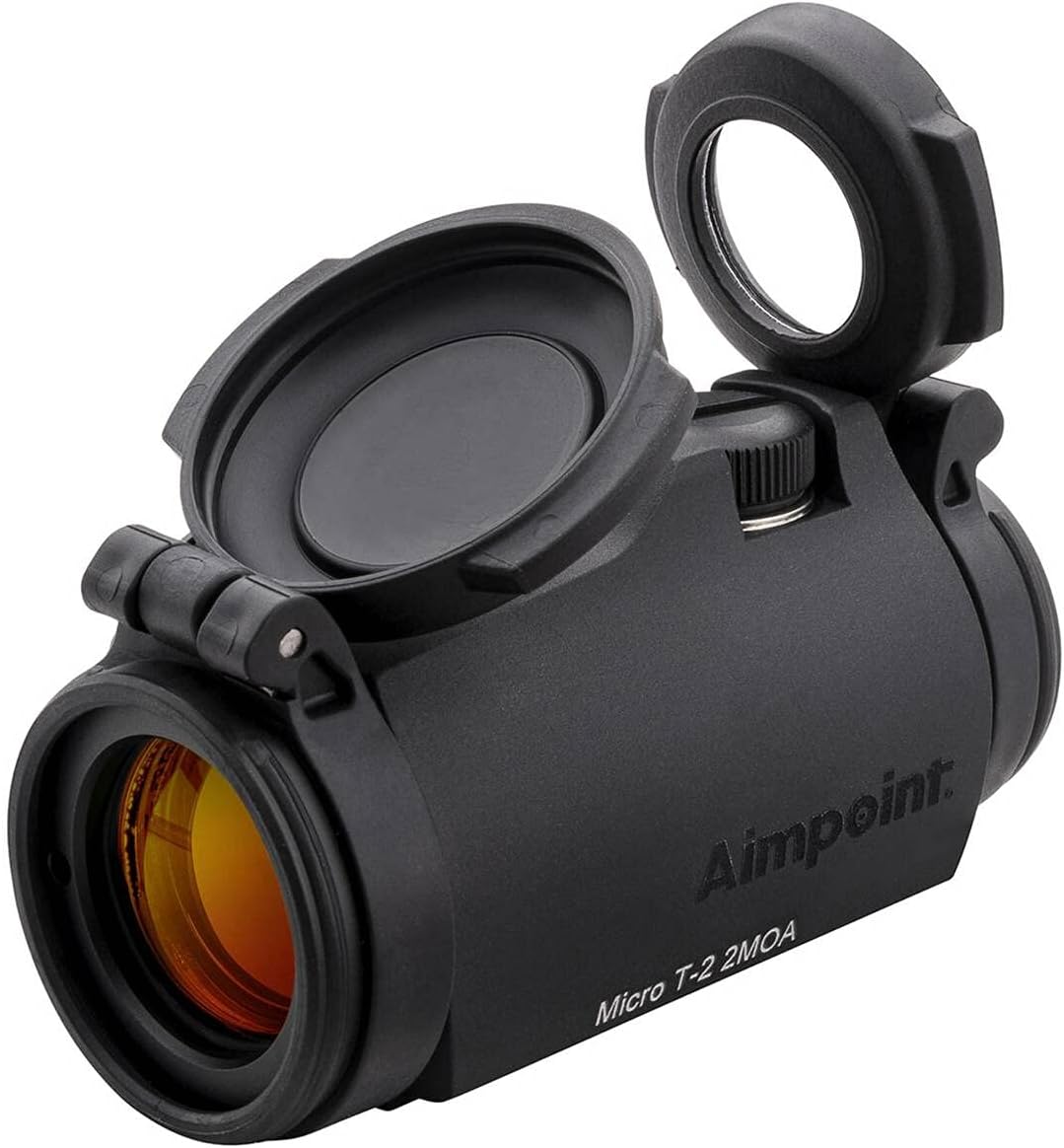
The Micro T-2 is the gold standard for durability and consistency on PCC platforms. It’s compact, nearly bombproof, and delivers a crisp 2 MOA dot with minimal distortion.
Specs
- 2 MOA dot
- 50,000-hour battery life
- Night vision compatible
- Fully enclosed emitter
- Weight: ~3 oz
Pros
- Exceptional battery life
- Virtually no parallax shift
- Clear, neutral glass
Cons
- Expensive
- Requires mount purchase
My hands-on notes
On the UDP-9, recoil impulse is snappy but short. The T-2 tracks perfectly—no dot smear or flicker. Parallax is extremely well controlled, even at off-axis shooting angles. With a lower 1/3 mount, co-witness is ideal without cluttering the window.
What people say online
Users consistently report unmatched reliability. Reddit discussions often highlight that once zeroed, it simply never drifts—even after thousands of rounds.
Mounting clarity
Uses Micro footprint. You’ll need an AR-height mount for proper co-witness.
╰┈➤ Explore User Feedback and Current Pricing on Amazon
HOLOSUN 510C
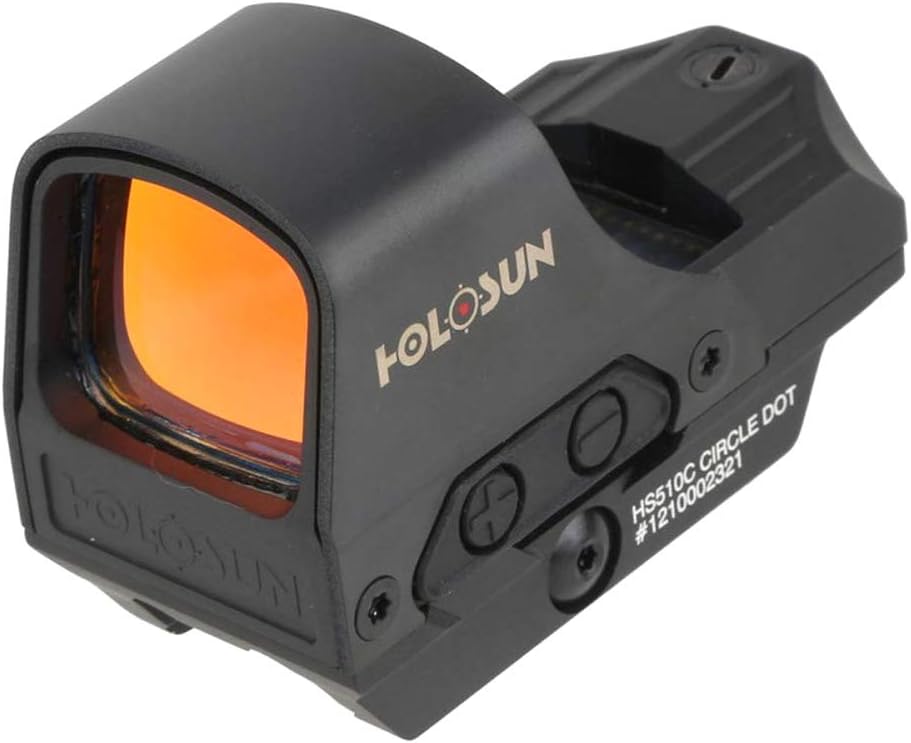
The 510C is a favorite for PCC shooters thanks to its wide window and fast acquisition.
Specs
- 2 MOA dot + 65 MOA circle
- Open emitter
- Solar backup
- Shake Awake
- Weight: ~4.9 oz
Pros
- Huge field of view
- Fast reticle acquisition
- Affordable performance
Cons
- Open emitter exposure
- Slight blue tint
My hands-on notes
This optic shines in close-range drills. The large window makes transitions incredibly fast. However, I noticed slight emitter occlusion when shooting from awkward angles. Parallax is decent but not Aimpoint-level.
What people say online
Shooters love it for USPSA PCC and home defense setups. Common feedback mentions speed over ultimate durability.
Mounting clarity
Integrated mount sits at lower 1/3 co-witness height—perfect for AR-pattern PCCs.
╰┈➤ Explore User Feedback and Current Pricing on Amazon
Trijicon MRO

The MRO offers a larger objective lens than micro dots, giving a more “open” sight picture.
Specs
- 2 MOA dot
- 5-year battery life
- Fully sealed housing
- Weight: 4.1 oz
Pros
- Wide field of view
- Rugged construction
- Long battery life
Cons
- Noticeable magnification (~1.05x)
- Slight edge distortion
My hands-on notes
On the UDP-9, the MRO feels fast but has a subtle magnification effect that some shooters dislike. Parallax is acceptable, but not perfect at extreme angles. The dot remains stable under rapid fire.
What people say online
Mixed opinions: some love the field of view, others criticize the tint and magnification.
Mounting clarity
Requires a mount; works best with lower 1/3 risers for proper cheek weld.
╰┈➤ Explore User Feedback and Current Pricing on Amazon
Sig Sauer Romeo5

The Romeo5 is the best budget-friendly optic that still performs reliably.
Specs
- 2 MOA dot
- Motion-activated illumination
- 40,000-hour battery
- Weight: 5.1 oz
Pros
- Excellent value
- Good battery system
- Lightweight
Cons
- Slight lens tint
- Buttons feel soft
My hands-on notes
The dot is clean, but the controls feel a bit mushy—especially with gloves. Parallax is acceptable for the price, though slight shift appears at extreme angles. Co-witness works well with included mount.
What people say online
Highly recommended for beginners. Many users report thousands of rounds without issues.
Mounting clarity
Includes both low and high mounts—ready for AR PCC out of the box.
╰┈➤ Explore User Feedback and Current Pricing on Amazon
EOTECH EXPS2
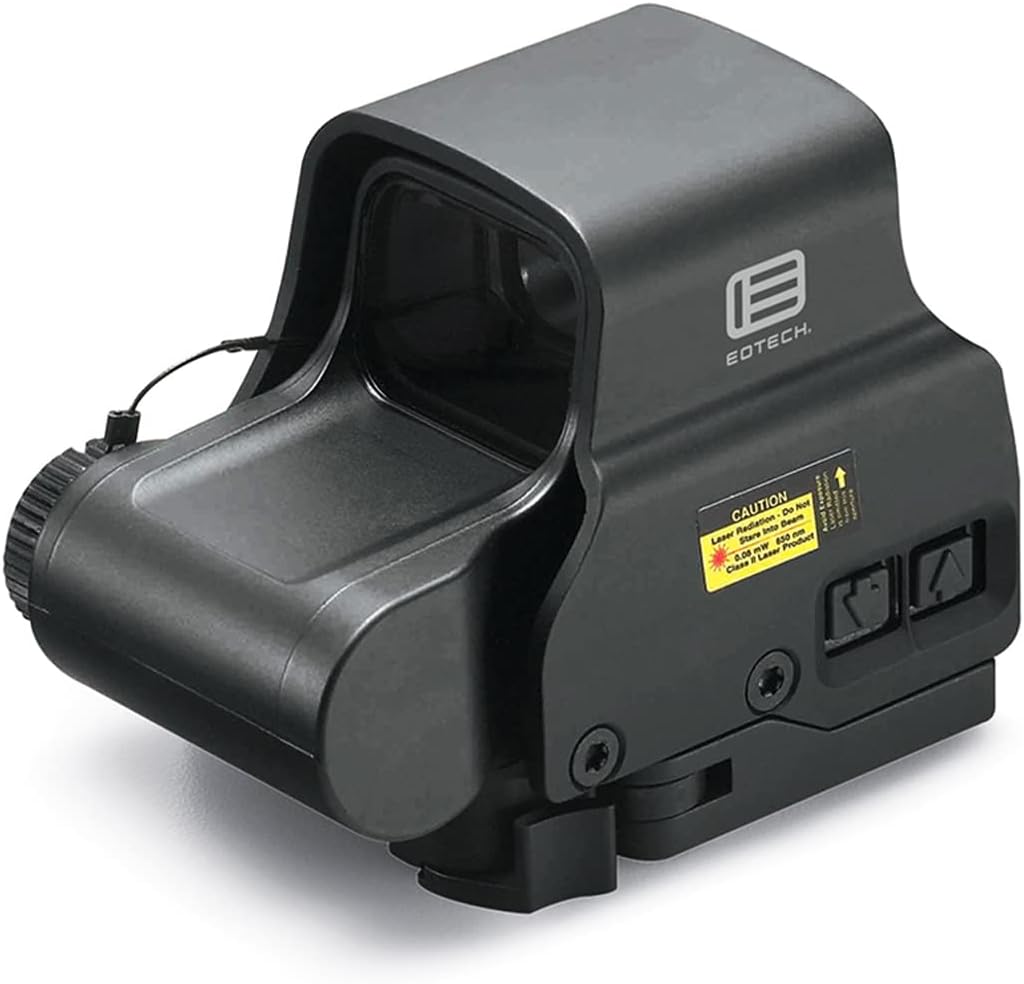
The EXPS2 is a holographic sight, not a traditional red dot—and that matters.
Specs
- 68 MOA ring + 1 MOA dot
- Holographic reticle
- Side buttons
- Weight: 11.2 oz
Pros
- True parallax-free performance
- Extremely fast reticle
- Large window
Cons
- Short battery life
- Heavier than others
My hands-on notes
This is the fastest optic here. The reticle snaps into view instantly, even during awkward transitions. No noticeable parallax shift. The downside is battery management—it requires attention.
What people say online
Users love it for CQB. Common complaint: battery life vs Aimpoint.
Mounting clarity
Integrated mount with absolute co-witness height.
╰┈➤ Explore User Feedback and Current Pricing on Amazon
HOLOSUN AEMS
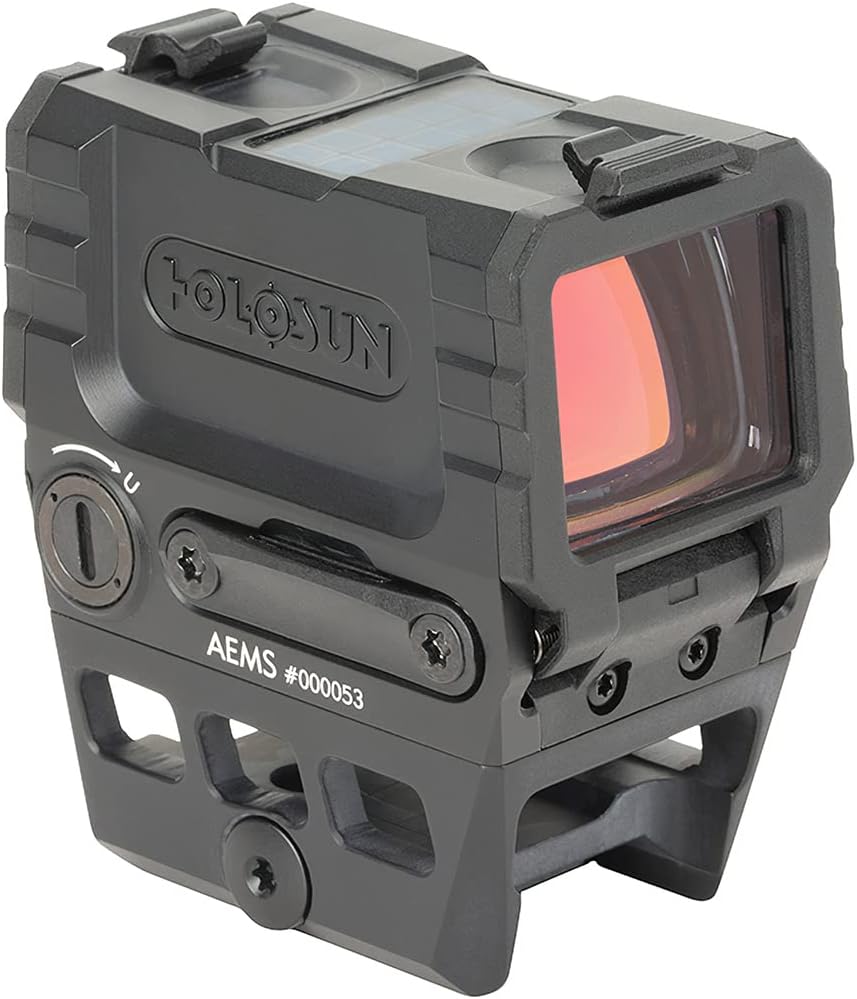
The AEMS combines enclosed durability with a large viewing window.
Specs
- Multi-reticle system
- Enclosed emitter
- Solar + battery
- Weight: 3.9 oz
Pros
- Excellent window size
- Durable enclosed design
- Long battery life
Cons
- Slight tint
- Bulkier profile
My hands-on notes
This optic balances speed and durability extremely well. The enclosed emitter eliminates debris issues, which matters on PCCs. Parallax is well controlled, and co-witness is clean with included mount.
What people say online
Widely praised as a modern upgrade over the 510C.
Mounting clarity
Ships with a mount optimized for AR height—no extra parts needed.
╰┈➤ Explore User Feedback and Current Pricing on Amazon
How I Tested / Evaluation Criteria
Parallax
I tested each optic by shooting from off-axis positions at 15–50 yards. True parallax-free performance is rare; the EXPS2 came closest. Budget optics showed slight shift, especially at edge-of-glass positions.
Co-witness / deck height
The UDP-9 benefits from lower 1/3 co-witness. Optics with integrated mounts (510C, AEMS) performed best. Improper height leads to awkward cheek weld and slower acquisition.
Durability
Blowback PCC recoil is sharper than expected. I looked for zero retention after rapid fire strings. Aimpoint and Trijicon dominated here.
Battery
Battery life matters more than you think. Optics like the T-2 and Romeo5 can be left on indefinitely. EOTECH requires active management.
Brightness range
I tested in both bright daylight and low-light indoor conditions. Overly bright dots bloom; weaker dots wash out. Holosun’s range is excellent.
Glass quality
Clarity, tint, and distortion were evaluated. Aimpoint had the cleanest glass; Holosun showed slight blue tint.
Controls ergonomics
Button feel matters under stress. The EXPS2 side buttons are excellent; Romeo5 feels softer, especially with gloves.
Mounting ecosystem
Micro footprint optics offer flexibility. Integrated mounts are convenient but less customizable.
How to Choose the Right Red Dot for This Gun
Choosing an optic for a UDP-9 is different from choosing one for a rifle. You’re dealing with a compact platform, fast engagement distances, and a recoil impulse that’s sharper than a gas-operated system.
First, prioritize window size and acquisition speed. A larger window like the 510C or EXPS2 gives you faster target pickup during transitions. This matters more than magnification or precision.
Second, consider emitter type. Open emitters are lighter and often faster, but enclosed emitters like the AEMS or T-2 handle debris, rain, and carbon better—especially on a blowback system where gases can vent backward.
Third, evaluate mount height and co-witness. The UDP-9 works best with lower 1/3 co-witness. Too low and you’ll struggle with cheek weld; too high and your sight picture becomes inconsistent.
Fourth, think about battery philosophy. If you want a “set it and forget it” optic, Aimpoint or Romeo5 are ideal. If you prioritize performance and don’t mind battery swaps, EOTECH delivers unmatched speed.
Finally, match your optic to your use case. Home defense favors fast acquisition and reliability. Competition favors wide windows and reticle options. Duty use demands durability above all.
This is where many people go wrong—they choose based on brand, not application. The UDP-9 rewards optics that are fast, forgiving, and stable under rapid fire.
FAQs
1. Do I need an enclosed emitter for a PCC?
Not strictly, but it helps. Blowback systems can push debris toward the optic.
2. What’s the best co-witness height?
Lower 1/3 is ideal for most shooters on the UDP-9.
3. Are holographic sights better than red dots?
They’re faster and more parallax-free, but heavier with shorter battery life.
4. Is a 2 MOA dot enough for PCC use?
Yes. At typical PCC distances, 2 MOA is precise and fast.
5. Can I use pistol red dots on a UDP-9?
You can, but rifle-style optics are more durable and easier to mount.
Conclusion
Finding the Best Red Dot for Angstadt UDP-9 comes down to balancing speed, durability, and mounting compatibility. After extensive testing, I’ve found that enclosed optics like the Aimpoint T-2 and Holosun AEMS offer the best all-around performance, while options like the EXPS2 dominate in speed-focused scenarios.
If you want reliability above all, go Aimpoint. If you want speed and value, Holosun delivers. And if you want the fastest reticle in the game, EOTECH is hard to beat.
Match the optic to your use—and the UDP-9 becomes an incredibly capable platform.