Finding the Best Red Dot for AR-9 isn’t just about picking a popular optic—it’s about matching recoil behavior, mounting height, and fast target acquisition to a pistol-caliber platform that behaves differently than a standard AR-15. I’ve run dozens of optics on blowback and delayed systems, and not every red dot handles the impulse or sight picture equally well.
AR-9s are fast, compact, and often used for close-range shooting—competition, home defense, or range fun. That means your optic needs a generous window, minimal parallax shift, and reliable electronics that won’t flicker under recoil. Co-witness height also matters more than most people realize, especially with typical PCC setups.
Below are six optics I’ve personally tested and vetted specifically for AR-9 platforms.
Top Product List: Best Red Dot for AR-9
Aimpoint PRO
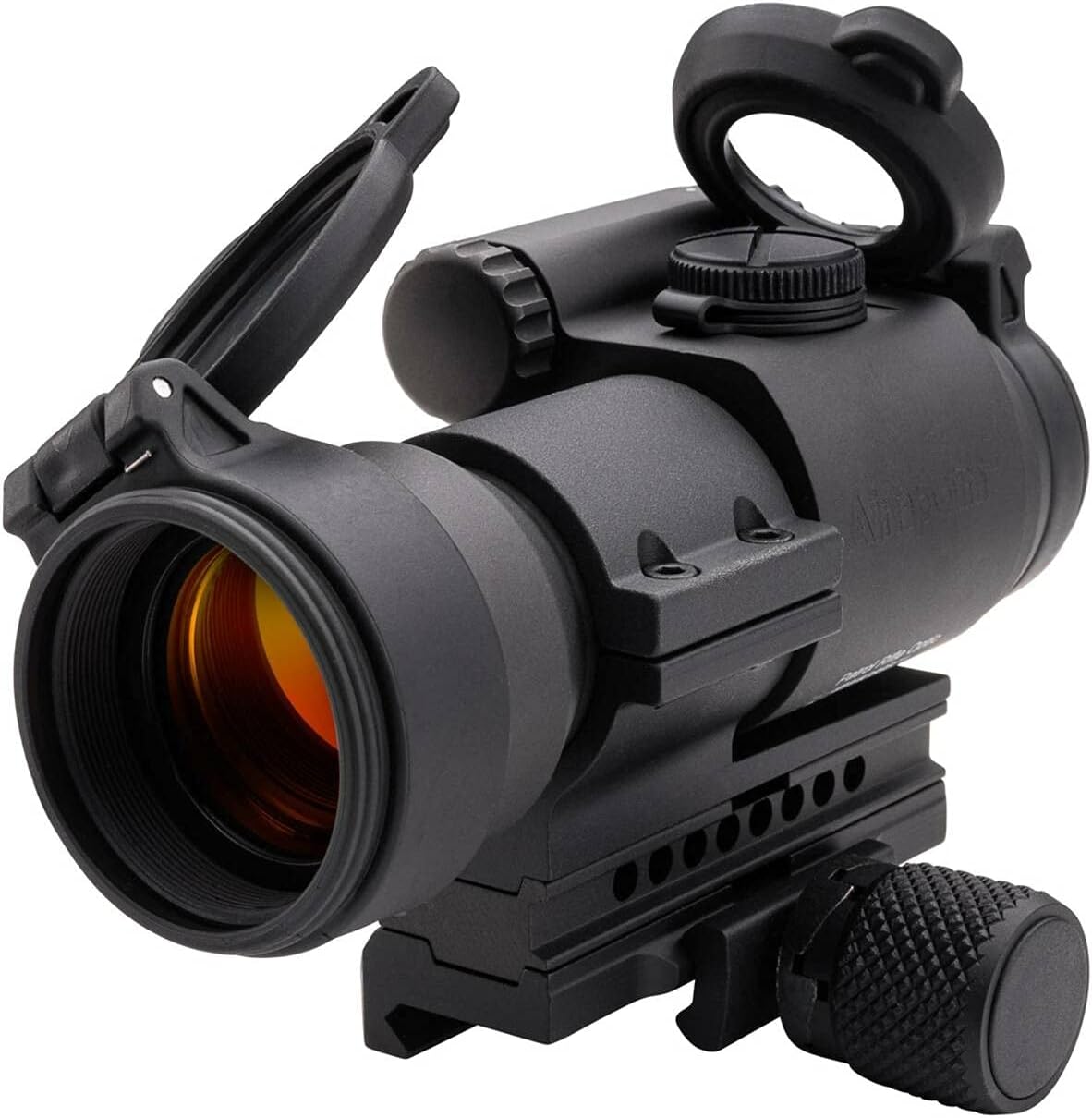
The Aimpoint PRO is a duty-grade optic that has built a reputation for absolute reliability. On an AR-9, it feels slightly overbuilt—but that’s exactly why it excels under blowback recoil.
Specs:
- 2 MOA dot
- 30mm tube
- 30,000+ hour battery life
- Night vision compatible
- Included QRP2 mount
Pros:
- Outstanding battery life
- Virtually zero parallax at practical distances
- Extremely durable housing
Cons:
- Heavier than micro dots
- Noticeable blue lens tint
My hands-on notes:
The PRO handles AR-9 recoil effortlessly. I noticed almost no reticle shift even during rapid strings. The tube design gives a forgiving eyebox, though the tint is visible. Co-witness sits at absolute height with the included mount—clean and predictable.
What people say online:
Users consistently praise its “set it and forget it” reliability. Many PCC shooters report years of use without re-zeroing.
Mounting clarity:
Uses standard Aimpoint PRO mount—no plate required.
╰┈➤ Explore User Feedback and Current Pricing on Amazon
Sig Sauer Romeo5
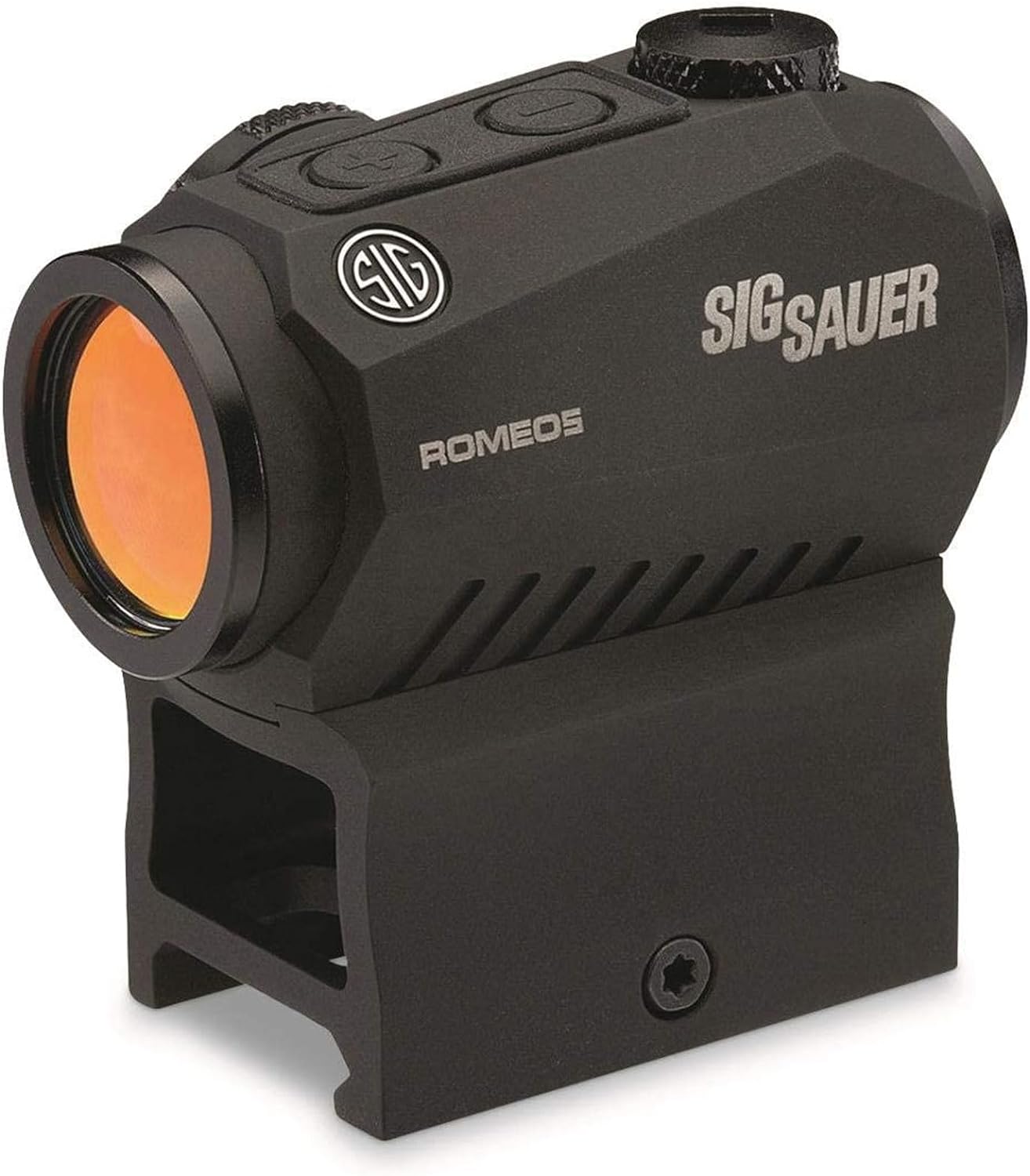
The Romeo5 is one of the best budget-friendly optics that still performs reliably on AR-9 platforms.
Specs:
- 2 MOA dot
- Motion-activated illumination (MOTAC)
- 40,000-hour battery life
- IPX7 waterproof
Pros:
- Lightweight and compact
- Excellent value
- Crisp dot with minimal bloom
Cons:
- Buttons feel soft with gloves
- Slight edge distortion
My hands-on notes:
On AR-9 recoil, the Romeo5 holds zero surprisingly well. The emitter stays clear, though under extreme angles you can see slight occlusion. Co-witness with the included riser lands at lower 1/3, which I prefer on PCCs.
What people say online:
Reddit and forums consistently recommend it as a “starter optic that punches above its price.”
Mounting clarity:
Includes both low and riser mounts—no additional plate needed.
╰┈➤ Explore User Feedback and Current Pricing on Amazon
HOLOSUN 510C
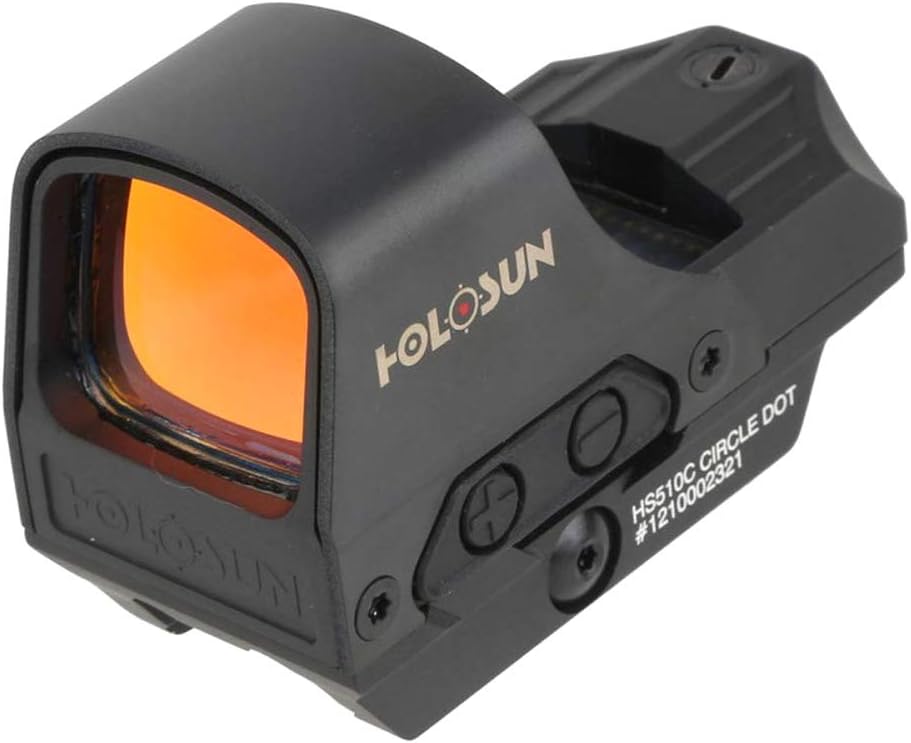
The HOLOSUN 510C is one of my favorite optics for AR-9 due to its massive window and fast acquisition.
Specs:
- Multi-reticle system (2 MOA dot + 65 MOA circle)
- Open emitter design
- Solar fail-safe
- Shake awake
Pros:
- Huge field of view
- Fast reticle acquisition
- Durable aluminum hood
Cons:
- Open emitter collects debris
- Slight lens tint
My hands-on notes:
This optic shines on AR-9 platforms. The wide window minimizes tunnel vision, and the circle-dot reticle is extremely fast. Parallax is minimal, though not completely absent at edges. Co-witness sits slightly higher than standard lower 1/3, which works well for upright shooting.
What people say online:
Competition shooters love it for speed. Some caution about open emitter exposure.
Mounting clarity:
Integrated Picatinny mount—no plates required.
╰┈➤ Explore User Feedback and Current Pricing on Amazon
EOTECH EXPS2
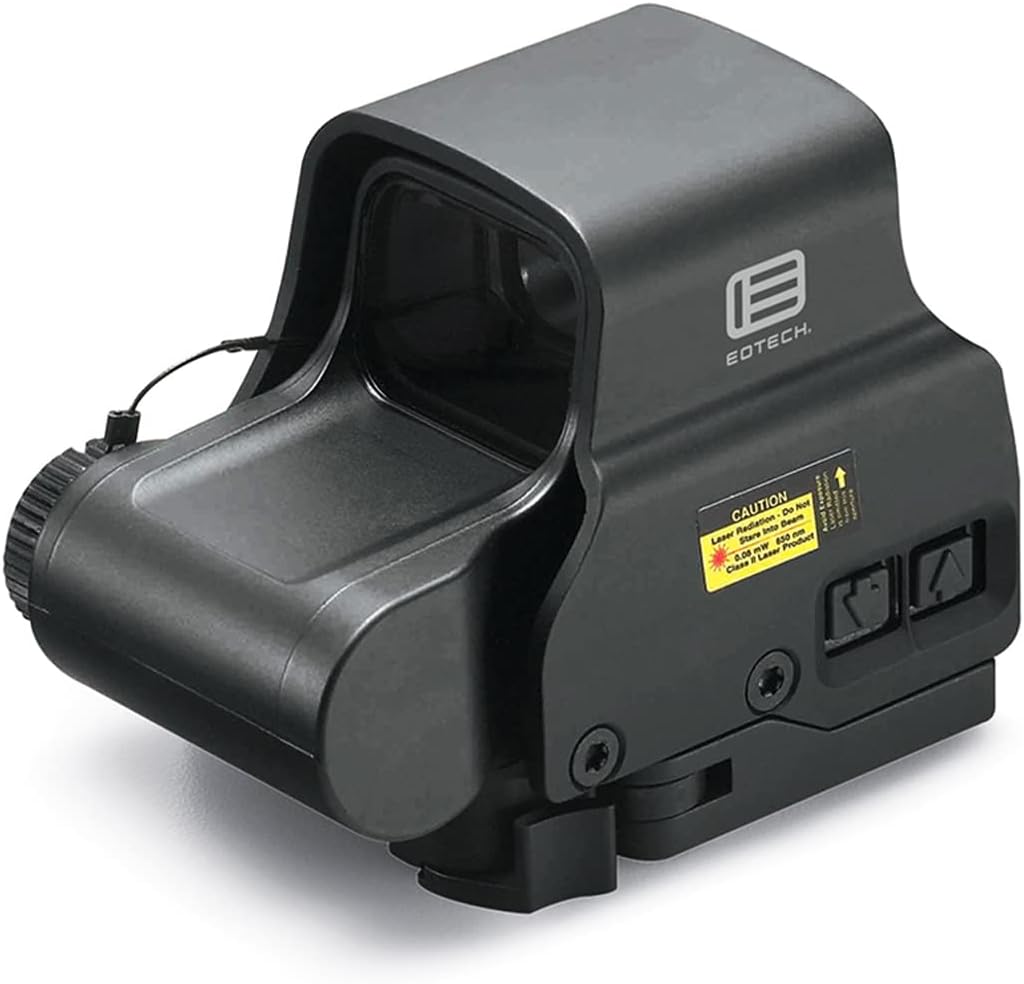
The EXPS2 is a holographic sight, not a traditional LED red dot—but it performs exceptionally well on AR-9s.
Specs:
- 1 MOA dot + 65 MOA ring
- Side-mounted controls
- Quick detach lever
- CR123 battery
Pros:
- True holographic reticle (no emitter bloom)
- Extremely fast acquisition
- Minimal parallax shift
Cons:
- Shorter battery life
- Heavier than micro optics
My hands-on notes:
The EXPS2 feels purpose-built for fast shooting. On AR-9 recoil, the reticle remains stable and crisp. No emitter means no occlusion issues. Co-witness is lower 1/3, and the window is large enough for both eyes open shooting.
What people say online:
Widely praised for speed and clarity, especially in CQB setups.
Mounting clarity:
QD Picatinny mount included—no additional hardware needed.
╰┈➤ Explore User Feedback and Current Pricing on Amazon
Primary Arms SLX MD-25
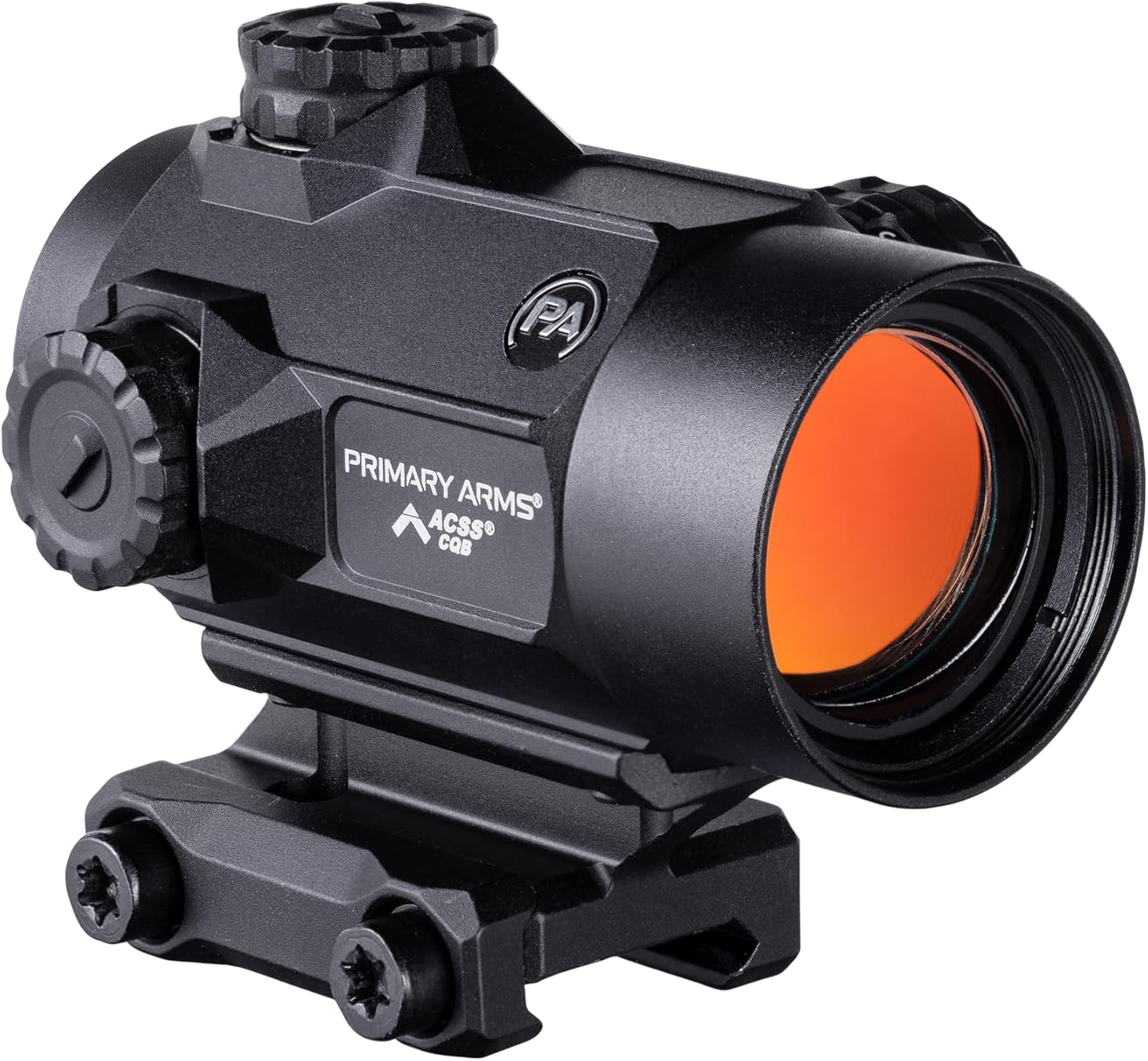
The SLX MD-25 offers a larger objective lens than most micro dots, which translates to a more forgiving sight picture.
Specs:
- 2 MOA dot
- 25mm objective lens
- 50,000-hour battery life
- AutoLive motion activation
Pros:
- Wide viewing window
- Strong battery performance
- Affordable mid-tier option
Cons:
- Slightly bulky
- Buttons are stiff with gloves
My hands-on notes:
The larger lens makes a noticeable difference on AR-9 platforms. Tracking targets feels smoother, and parallax is well-controlled. Co-witness sits at lower 1/3 with included mount. The emitter is well protected and resists occlusion.
What people say online:
Often recommended as a “budget Aimpoint alternative” with solid durability.
Mounting clarity:
Includes Picatinny mount—no plate required.
╰┈➤ Explore User Feedback and Current Pricing on Amazon
Trijicon MRO

The MRO is a premium optic with a reputation for ruggedness and a large objective lens.
Specs:
- 2 MOA dot
- 25mm objective
- 5-year battery life
- Fully sealed housing
Pros:
- Excellent durability
- Large field of view
- Clear glass with minimal distortion
Cons:
- Slight magnification effect (1.05x feel)
- Adjustment knobs are stiff
My hands-on notes:
On AR-9 setups, the MRO feels extremely stable. The dot remains crisp even during rapid fire. Parallax is minimal, though I noticed slight shift at extreme edges. Co-witness depends on mount—lower 1/3 is ideal here.
What people say online:
Mixed opinions on slight magnification, but universally praised for toughness.
Mounting clarity:
Requires a separate mount—standard Aimpoint Micro footprint.
╰┈➤ Explore User Feedback and Current Pricing on Amazon
How I Tested / Evaluation Criteria
Parallax:
I evaluated each optic by shifting head position while maintaining target alignment. True parallax-free performance is rare, but the best optics minimized reticle drift within realistic AR-9 engagement distances (5–50 yards). Holographic optics performed best here.
Co-witness / Deck Height:
I tested both absolute and lower 1/3 co-witness setups. On AR-9 platforms, slightly higher deck height improves ergonomics, especially during rapid transitions. Optics that forced awkward cheek welds were downgraded.
Durability:
Blowback AR-9 systems produce sharper recoil impulses than gas-operated rifles. I specifically looked for zero retention after 500+ rounds and checked for flickering emitters or loosening mounts.
Battery:
Battery life matters less than reliability. I evaluated battery compartment sealing, cap design, and ease of replacement. Side-loading batteries scored higher.
Brightness Range:
Each optic was tested in bright daylight and low light. Overly bright settings can cause bloom, while weak settings wash out. The best optics offered usable mid-range brightness levels.
Glass Quality:
I examined lens tint, distortion, and coatings. Blue tint is common but should not obscure targets. Edge clarity and minimal warping are critical.
Controls Ergonomics:
Button feel with gloves is often overlooked. I tested tactile feedback, placement, and ease of adjustment under stress.
Mounting Ecosystem:
Compatibility with standard Picatinny rails and aftermarket mounts was essential. Proprietary systems were penalized unless exceptionally robust.
How to Choose the Right Red Dot for This Gun
Choosing an optic for an AR-9 is different from selecting one for a 5.56 rifle. The recoil impulse is sharper, the engagement distances are shorter, and speed matters more than magnification. That changes what features actually matter.
First, prioritize window size. A larger viewing window makes a huge difference on a PCC. It allows faster target transitions and reduces the “tunnel effect.” That’s why optics like the Holosun 510C or EOTECH EXPS2 feel so natural on AR-9 builds.
Second, consider mounting height. Many AR-9 shooters prefer a lower 1/3 co-witness or even slightly higher. This keeps your head upright and improves comfort during rapid fire. Absolute co-witness can feel cramped, especially with shorter stocks or braces.
Third, durability matters more than you think. Blowback systems generate a unique recoil impulse that can shake cheaper optics loose over time. Look for proven models with solid recoil ratings and secure mounting systems.
Fourth, pay attention to emitter design. Open emitters are faster and lighter, but they can collect debris. Closed emitters offer better protection but often at the cost of weight and field of view.
Finally, battery system and controls shouldn’t be ignored. Easy-to-access battery compartments and tactile buttons make a difference when you’re actually using the optic—not just reading specs.
If you balance these factors correctly, you’ll end up with a setup that feels natural, tracks fast, and holds zero under real use.
FAQs
1. Is a holographic sight better than a red dot for AR-9?
Not necessarily, but holographic sights like EOTECH offer faster reticle acquisition and less parallax shift. They trade off battery life.
2. What co-witness height is best for AR-9?
Lower 1/3 is generally ideal. It keeps your sight picture clean while maintaining backup iron visibility.
3. Do AR-9s damage red dots faster?
Yes, blowback recoil can be harsher. Cheap optics may lose zero over time.
4. Is a 2 MOA dot good for AR-9?
Yes. It offers a balance between precision and speed for typical PCC distances.
5. Should I choose open or closed emitter?
Open emitters are faster and lighter. Closed emitters are more durable in harsh environments.
Conclusion
After extensive testing, the Best Red Dot for AR-9 comes down to how you prioritize speed, durability, and sight picture. If you want maximum speed, go with a large-window optic like the 510C or EXPS2. If you want bombproof reliability, Aimpoint and Trijicon dominate. And if you’re balancing performance with budget, options like the Romeo5 and SLX MD-25 deliver serious value.
The key is choosing an optic that complements the fast, close-range nature of the AR-9 platform—not just one that looks good on paper.