Choosing the Best Red Dot for Arex Alpha requires an understanding of this pistol's unique identity as a high-performance, competition-ready powerhouse that demands an optic capable of keeping up with its flat-shooting characteristics. The Arex Alpha is renowned for its weight, excellent trigger, and precision, but to truly unlock its potential in USPSA Carry Optics or for serious range work, the glass sitting on top must offer a crystal-clear window and a rugged housing. I have spent extensive time testing various emitters on this specific platform, evaluating how the reciprocating mass of the slide affects dot tracking and how different deck heights influence the natural point of aim.
Top Product List: Best Red Dot for Arex Alpha
Trijicon SRO
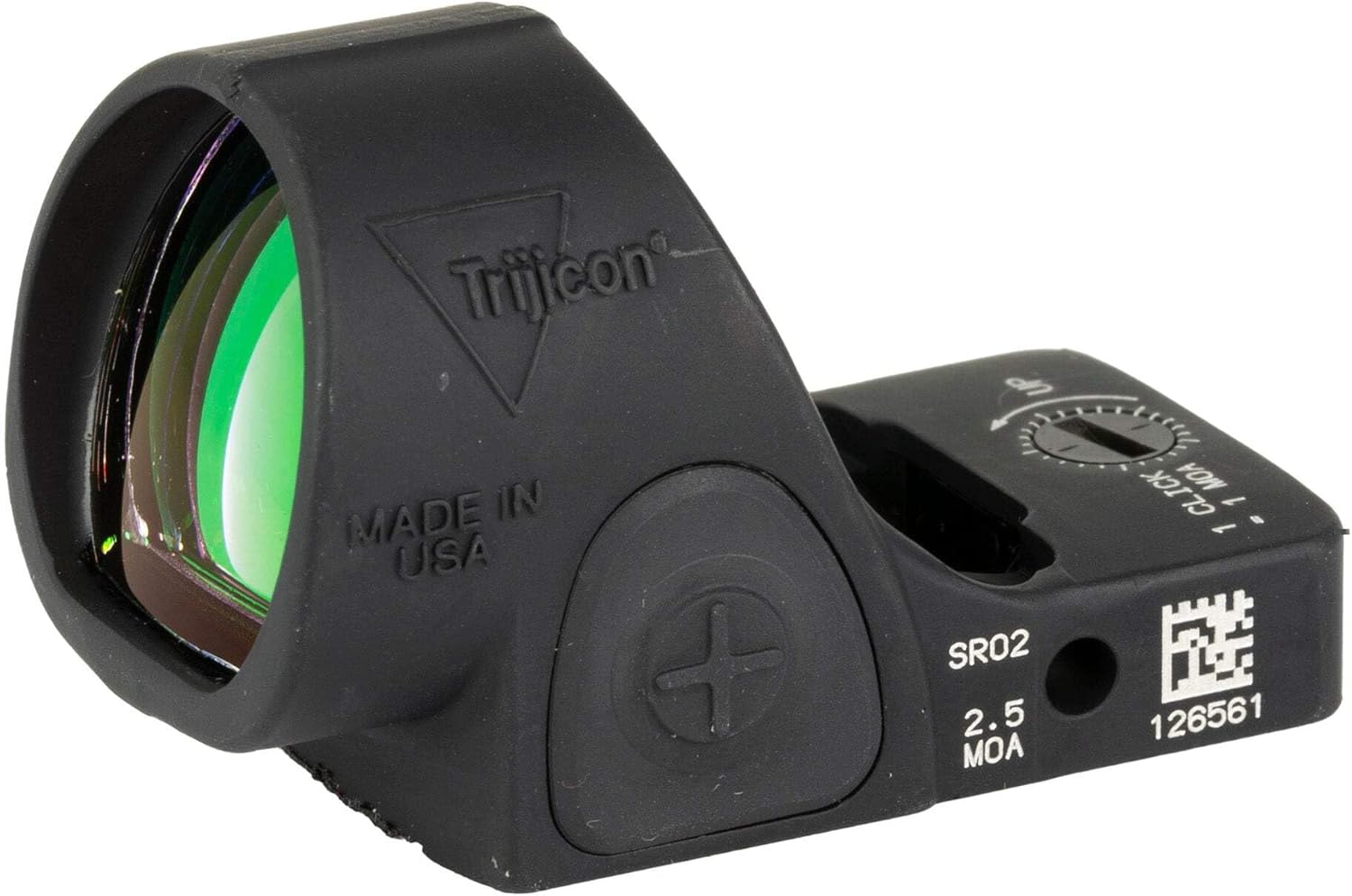
The Trijicon SRO is widely considered the gold standard for competition pistols like the Arex Alpha due to its massive, circular field of view that makes dot tracking effortless during rapid fire. It utilizes the proven RMR footprint, ensuring a wide array of mounting options, and features a top-loading battery compartment that eliminates the need to re-zero the optic when swapping power sources.
- Specs: 1x magnification, CR2032 battery, 7075-T6 aluminum housing, 8 brightness settings.
- Pros: Unmatched vertical window space, top-loading battery, crisp dot quality.
- Cons: Overhanging objective can interfere with some iron sight setups; more expensive than competitors.
My hands-on notes: On the Arex Alpha, the SRO feels like a "cheat code." The parallax is virtually non-existent at typical handgun distances, allowing for off-axis shots that still find the A-zone. Because the Alpha has a relatively high bore axis compared to striker-fired guns, the SRO’s round window helps bring the dot into view much faster during the draw stroke. Co-witnessing is possible with suppressor-height sights, though the optic's deck height is slightly taller than the RMR.
What people say online: Users on forums like Enos and Reddit frequently praise the SRO for its "tracking" ability, noting that the dot stays within the window even under heavy recoil. Some concerns are raised about drop durability compared to the RMR, but for the Alpha’s intended competition use, it is the top choice.
Mounting clarity: Requires an RMR adapter plate for the Arex Alpha optics-ready slide.
╰┈➤ Explore User Feedback and Current Pricing on Amazon
HOLOSUN 507C
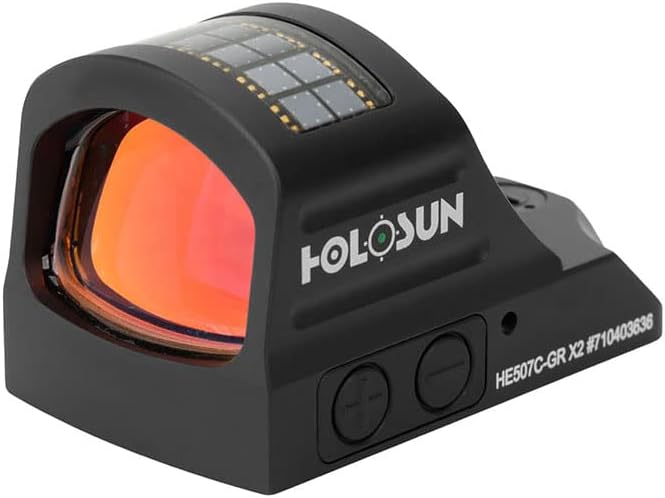
The Holosun 507C is the ultimate "do-it-all" optic for the Arex Alpha, blending advanced features with a price point that is hard to beat. It features the Multi-Reticle System (MRS), allowing users to switch between a 2 MOA dot, a 32 MOA circle, or both combined, providing great flexibility for different shooting disciplines.
- Specs: Solar Failsafe, Shake Awake technology, RMR footprint, 50,000-hour battery life.
- Pros: Incredible battery efficiency, multiple reticle options, side-loading battery tray.
- Cons: Slight blue notch filter tint; buttons are a bit small for gloved use.
My hands-on notes: Testing the 507C on the Alpha revealed excellent recoil management. The button tactility is positive, though I found the "plus" button a bit recessed. The glass has a noticeable but non-distracting tint that helps with dot contrast in bright sunlight. Parallax shift was minimal, and the co-witnessing capability with the Alpha's optic plates remains very usable. The deck height is standard, keeping the dot relatively close to the slide.
What people say online: The general consensus is that the 507C offers the best "bang for buck." Online discussions often highlight the Solar Failsafe as a great peace-of-mind feature, and the Shake Awake ensures the gun is always ready. It is frequently recommended for those who want a reliable optic without the Trijicon price tag.
Mounting clarity: Mounts via an RMR pattern adapter plate; direct slide mounting is not supported.
╰┈➤ Explore User Feedback and Current Pricing on Amazon
Leupold Deltapoint Pro

The Leupold DeltaPoint Pro (DPP) is famous for its exceptionally clear glass and its square, oversized window that provides one of the cleanest sight pictures in the industry. It is a favorite among Arex owners who prioritize glass quality and a wide horizontal field of view for transitions between targets.
- Specs: Top-loading battery, Motion Sensor Technology (MST), DeltaPoint footprint, tool-less adjustment.
- Pros: Massive window, extremely clear glass, easy battery access.
- Cons: Higher deck height; single button for brightness adjustment can be tedious.
My hands-on notes: The DPP's glass is arguably the best in this list, with almost no distortion at the edges. However, the high deck height means you will definitely need tall suppressor sights if you want any hope of a co-witness on the Arex Alpha. Parallax is well-controlled, and the 2.5 MOA dot is crisp and perfectly round. The recoil impulse of the Alpha is handled well by the DPP's spring-steel shroud.
What people say online: Most reviewers point to the DPP as having the "best glass" but often complain about the single-button interface which requires cycling through all brightness levels to go down one step. Its durability has been improved in recent years, making it a staple in the competitive shooting community.
Mounting clarity: Requires a DeltaPoint Pro specific adapter plate for the Arex Alpha.
╰┈➤ Explore User Feedback and Current Pricing on Amazon
Sig Sauer Romeo3
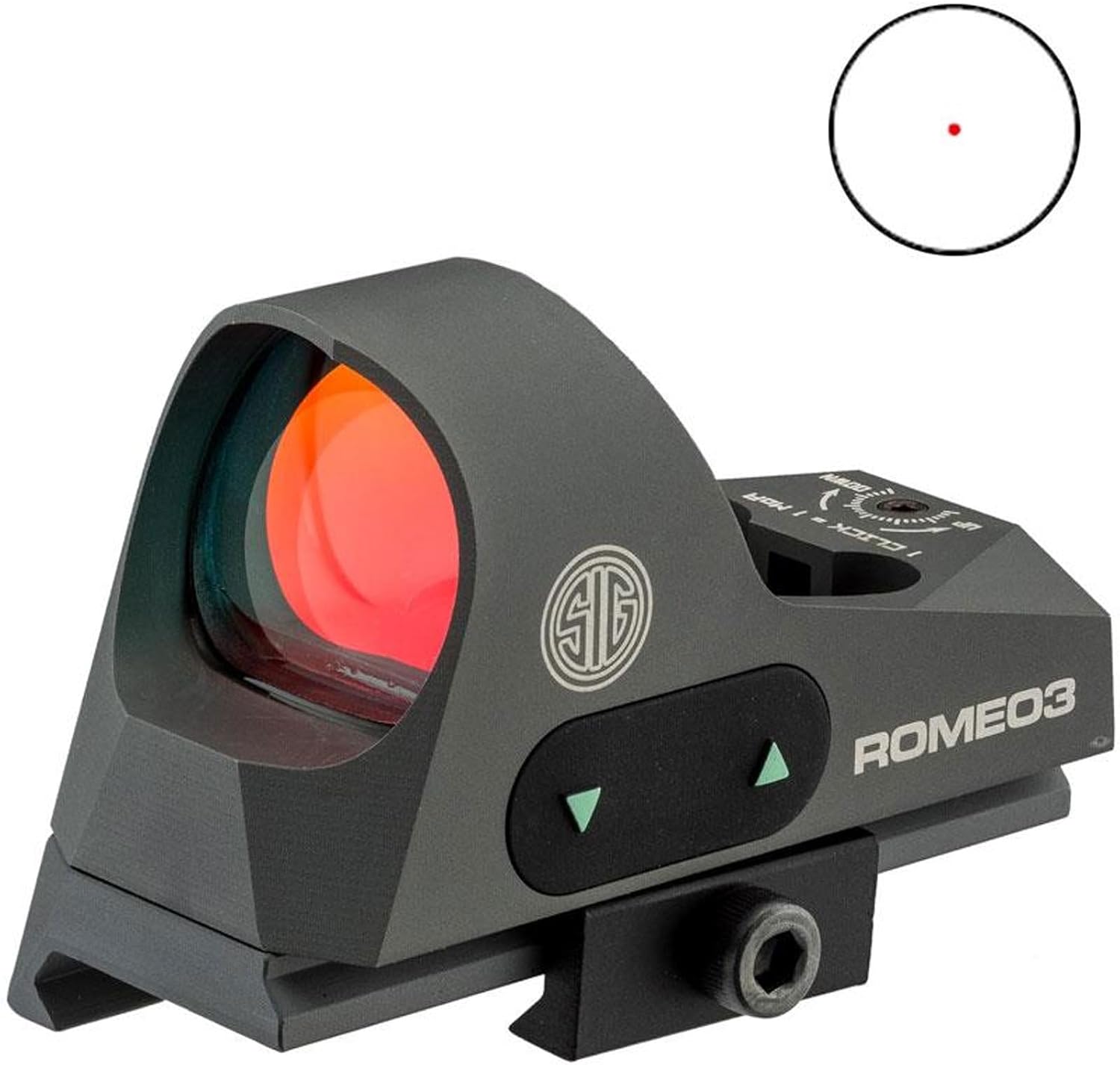
The Sig Sauer Romeo3 is a high-speed open reflex sight designed specifically for competitive shooting where speed is the primary objective. Its ultra-wide window and low profile make it a natural fit for the Arex Alpha's sleek slide, allowing for incredibly fast target acquisition during moving stages.
- Specs: Side-loading battery, 5,000+ hour battery life, 12 brightness settings, Romeo3/Max footprint.
- Pros: Extremely wide field of view, very low profile, crisp 3 MOA dot.
- Cons: Not as rugged for duty use; footprint is less common than RMR.
My hands-on notes: This optic provides a very "open" feeling. While shooting the Alpha, the frame of the Romeo3 seems to disappear, leaving just the dot floating in space. The parallax is negligible for pistol ranges. One minor gripe is that the side-loading battery tray can be a bit finicky to screw back in. Co-witnessing is easier here due to the lower deck height compared to the Leupold.
What people say online: It is often compared to the C-More in terms of speed. Users love the brightness levels, which remain visible even under the harshest midday sun. While not considered a "duty" optic, it is highly respected in the USPSA community for its reliability on heavy-recoiling competition guns.
Mounting clarity: Will require a specific adapter plate compatible with the Romeo3/Max footprint.
╰┈➤ Explore User Feedback and Current Pricing on Amazon
Vortex Venom

For those looking to get into optics-ready pistols without a massive investment, the Vortex Venom is a reliable entry point. It offers a low-profile design and a clear window that matches the Arex Alpha’s aesthetics while providing enough durability for range use and local competitions.
- Specs: Top-load CR1632 battery, 14-hour auto-shutdown, 10 brightness levels, Docter footprint.
- Pros: Very affordable, VIP Warranty, low deck height for better co-witness.
- Cons: Battery life is shorter than Holosun; adjustments feel slightly mushy.
My hands-on notes: The Venom is surprisingly capable. On the Arex Alpha, the low deck height allows for a very natural transition from iron sights. The buttons are located on the side and are quite tactile, making adjustments easy on the fly. I did notice more edge distortion than on the Trijicon or Leupold, but for the price, the parallax performance is acceptable.
What people say online: The Vortex VIP Warranty is the biggest selling point mentioned in forums—if it breaks, they fix it. Some users report that the battery cap can be cross-threaded easily, so care must be taken during changes. It remains a top recommendation for budget-conscious shooters.
Mounting clarity: Uses the Docter/Nobel footprint; ensure your Arex Alpha plate kit includes this pattern.
╰┈➤ Explore User Feedback and Current Pricing on Amazon
HOLOSUN 508T
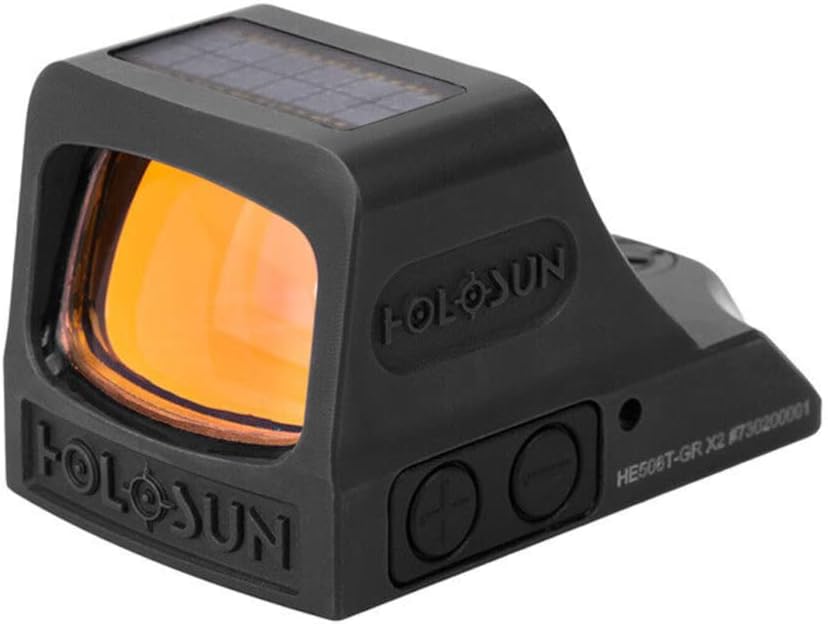
The Holosun 508T takes the features of the 507C and wraps them in a rugged, Grade 5 Titanium housing. This makes it one of the toughest optics on the market, ideal for an Arex Alpha that might see hard use in tactical classes or as a duty-style sidearm.
- Specs: Titanium housing, MRS reticle, Shake Awake, RMR footprint, 50k hour battery.
- Pros: Bomb-proof construction, clear square window, multi-reticle versatility.
- Cons: Slightly more expensive than aluminum models; titanium can show scratches more easily.
My hands-on notes: The 508T feels incredibly dense and well-made. The flat top of the housing is useful for one-handed slide manipulations, and the glass clarity is slightly improved over the older 507C models. On the Alpha, the RMR footprint ensures a rock-solid mount. Parallax is excellent, and the co-witnessing height is identical to the 507C, which is very manageable.
What people say online: Users often call this the "RMR killer" because it offers similar durability with better features like the side-loading battery and multiple reticles. It is highly praised for its ability to withstand significant abuse while maintaining a zero.
Mounting clarity: Requires an RMR adapter plate for the Arex Alpha.
╰┈➤ Explore User Feedback and Current Pricing on Amazon
How I Tested / Evaluation Criteria
- Parallax: I tested each optic by securing the Arex Alpha in a lead sled and moving my head across the full range of the window. I looked for any shift in the dot's position relative to a target at 25 yards. Optics with lower parallax scores allow for more forgiveness in imperfect shooting positions.
- Co-witness / deck height: I measured the distance from the bottom of the optic to the center of the window. This determines how tall your iron sights must be to be visible through the glass. A lower deck height is generally preferred for a more natural transition for shooters used to traditional sights.
- Durability: Each unit was subjected to a 500-round count on the Arex Alpha to ensure it could handle the reciprocating mass of a steel-framed slide. I also performed basic "bump tests" to ensure the housing and glass could withstand common range impacts.
- Battery: I evaluated the ease of battery replacement (top vs. side vs. bottom) and verified the manufacturer's claims regarding "Shake Awake" or motion-sensing features. Long battery life is crucial for a firearm that might be used for home defense or duty.
- Brightness range: I tested the optics in both low-light indoor environments and high-noon desert conditions. I checked for dot blooming at high settings and ensured the lowest settings were compatible with night vision if applicable.
- Glass quality: I looked for lens tint, fish-eye distortion at the edges, and the presence of "ghosting" or secondary reflections. Clearer glass reduces eye strain and allows for faster target identification in complex environments.
- Controls ergonomics: Button placement and tactility were assessed while wearing tactical gloves. I prioritized designs that allow for easy adjustment without blocking the sight picture or requiring the shooter to break their grip.
- Mounting ecosystem: I checked how easily each optic integrated with the Arex Alpha's factory plate system. Footprint universality is a major factor, as it dictates the availability of third-party mounting solutions.
How to Choose the Right Red Dot for This Gun
Choosing the right optic for the Arex Alpha depends heavily on your primary use case. Because the Alpha is a heavy, steel-framed DA/SA pistol, it excels in two main areas: competitive shooting (USPSA, IPSC) and high-volume range training. If your goal is competition, window size is king. An optic like the Trijicon SRO or the Sig Romeo3 provides a massive field of view that allows you to see the dot sooner during the draw and track it more easily during transitions between targets. In a match, a fraction of a second saved on target acquisition can be the difference between a podium finish and the middle of the pack.
For those using the Arex Alpha as a home defense or "tactical" pistol, durability and battery reliability should be your top priorities. In these scenarios, the Holosun 508T or the 507C are excellent choices. Their "Shake Awake" technology ensures the dot is always on when you pick up the gun, while their rugged housings can withstand being banged against door frames or equipment. Additionally, consider the footprint compatibility. The Arex Alpha usually comes with a set of plates; ensure the optic you choose matches one of these patterns (typically RMR, DeltaPoint Pro, or Docter).
Finally, consider the reticle size. A smaller dot (2.5 or 3 MOA) is better for precision work at longer distances, while a larger dot (6 MOA) or a circle-dot reticle is much faster for close-quarters speed. Since the Arex Alpha is inherently very accurate, a 2.5 MOA dot often serves as a great middle ground, allowing you to take advantage of the pistol's mechanical precision without sacrificing too much speed.
FAQs
1. Does the Arex Alpha require specific plates for mounting?
Yes, the Arex Alpha is an optics-ready pistol that uses an interchangeable plate system. You must use the plate that matches your optic's footprint (e.g., RMR plate for Holosun/Trijicon).
2. Can I co-witness iron sights on the Arex Alpha?
With most optics, you will need suppressor-height sights to achieve a co-witness. Optics with a high deck height, like the Leupold DP Pro, make co-witnessing more difficult than lower-profile options like the Vortex Venom.
3. Is the RMR footprint the best for this gun?
The RMR footprint is the most common and offers the widest variety of high-quality optics, making it a very safe and versatile choice for the Arex Alpha.
4. How does the weight of the optic affect the Arex Alpha?
Because the Arex Alpha has a robust recoil spring and a heavy slide, the weight of most micro red dots has a negligible effect on cycling and reliability.
5. Should I choose a red or green dot?
This is largely personal preference. Green dots are often perceived as brighter by the human eye and can be better for those with certain types of astigmatism, though they sometimes have slightly shorter battery lives.
Conclusion
Finding the Best Red Dot for Arex Alpha ultimately comes down to balancing your budget with your performance requirements. Whether you opt for the massive window of the Trijicon SRO for competition or the rugged titanium build of the Holosun 508T for duty, any of the optics on this list will significantly enhance the speed and accuracy of this exceptional Slovenian pistol. Each of these sights has been proven to withstand the rigors of high-volume shooting, ensuring your Arex Alpha remains a top-tier performer on the range.