Choosing the best red dot for Arsenal Firearms Strike One is a critical decision for any shooter looking to leverage this pistol's uniquely low bore axis and straight-pull horizontal locking system. The Strike One is renowned for its incredibly fast cycling and minimal muzzle flip, and pairing it with the right optic can transform it into one of the most capable speed-shooting platforms on the market. In this guide, I evaluate the top contenders based on footprint compatibility, window clarity, and long-term durability to ensure your optic keeps pace with this high-performance handgun.
Quick Summary Table
ProductBest ForFootprintWindowBatteryDurabilityDot SizeRatingTrijicon RMR Type 2Duty/CombatRMR22x16mm30k hrsExtreme3.25 MOA4.9/5Holosun 507CVersatilityRMR23x16mm50k hrsHighMulti-Reticle4.8/5Leupold DP ProCompetitionDeltaPoint25.7x17.5mm15k hrsModerate2.5 MOA4.6/5Aimpoint ACRO P-2Harsh EnvironsACRO15x15mm50k hrsBombproof3.5 MOA4.9/5Sig Sauer Romeo1Value/EntryRomeo130mm5k hrsStandard3 MOA4.2/5Vortex VenomBudget TargetDocter26.4x16mm3k hrsStandard3 MOA4.0/5
Top Product List: Best Red Dot for Arsenal Firearms Strike One
- Trijicon RMR Type 2
- HOLOSUN 507C
- Leupold Deltapoint Pro
- Aimpoint ACRO P-2
- Sig Sauer Romeo1
- Vortex Venom
Trijicon RMR Type 2

The Trijicon RMR Type 2 remains the gold standard for duty-grade optics, offering a patented housing shape that diverts impact energy away from the lens. Its ruggedized electronics ensure it can withstand the rapid slide velocity of the Strike One without flickering or losing zero over thousands of rounds.
- Specs: 1.2 oz weight, CR2032 battery, 8 brightness settings, 7075-T6 aluminum.
- Pros: Unmatched durability, extremely clear glass, long battery life.
- Cons: Bottom-loading battery requires re-zeroing after changes, small window.
My hands-on notes: The button tactility is excellent, providing a positive "click" even when wearing tactical gloves. I noticed zero parallax shift at standard pistol distances, and the blue tint—while present—actually helps the red dot pop in bright sunlight. On the Strike One, the low deck height allows for a comfortable co-witness if your slide is milled correctly.
What people say online: Users on forums like M4Carbine frequently praise the RMR for its "set it and forget it" reliability. Some complain about the battery location, but most agree the four-year lifespan makes it a minor inconvenience compared to the peace of mind it provides.
Mounting clarity: Requires an RMR footprint. Most Strike One optic-ready slides or plates use this as the primary standard.
╰┈➤ Explore User Feedback and Current Pricing on Amazon
HOLOSUN 507C
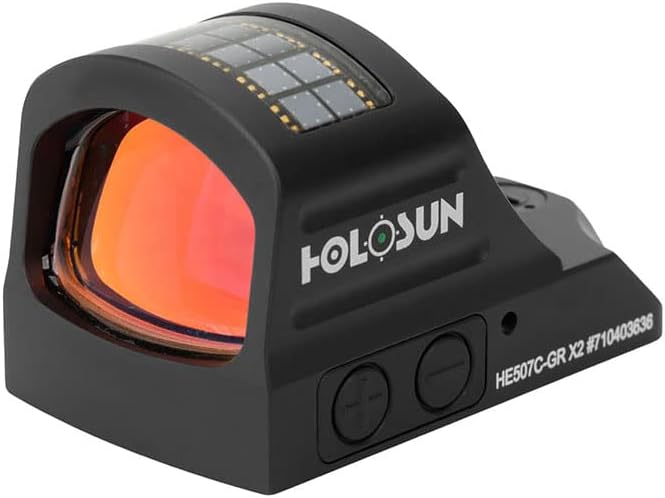
The Holosun 507C is a feature-rich alternative that brings solar failsafe technology and a versatile multi-reticle system to the Strike One platform. It offers a side-loading battery tray, meaning you never have to remove the optic from the slide, preserving your zero indefinitely.
- Specs: Shake Awake technology, Solar Failsafe, 50k hour battery, RMR footprint.
- Pros: Multiple reticle options (dot or circle-dot), side battery tray, affordable.
- Cons: Slight edge distortion in the glass, emitter can be occluded by debris.
My hands-on notes: The 32 MOA circle is fantastic for rapid transitions, which complements the Strike One's fast-shooting nature. The buttons are recessed to prevent accidental brightness changes. I found the glass quality to be very good, though there is a slight magnification effect near the very edges of the window.
What people say online: Reddit's r/Handguns community often recommends this as the best "bang for your buck" optic. Users appreciate the Shake Awake feature, which ensures the dot is always ready without draining the battery during storage.
Mounting clarity: Direct fit for RMR plates or milled slides. No adapter needed if you have an RMR-cut Strike One.
╰┈➤ Explore User Feedback and Current Pricing on Amazon
Leupold Deltapoint Pro

For those using the Strike One in a competition setting, the Leupold Deltapoint Pro offers one of the largest and clearest viewing windows available. Its top-loading battery and tool-less adjustments make it incredibly user-friendly for high-volume shooters who prioritize speed of target acquisition.
- Specs: Large aspheric lens, top-load battery, Motion Sensor Technology (MST).
- Pros: Massive field of view, crisp 2.5 MOA dot, professional-grade glass.
- Cons: High deck height makes co-witnessing difficult, shorter battery life.
My hands-on notes: The window is massive, making it very easy to "find the dot" under stress. However, the deck height is significantly taller than the RMR, which might require extra-tall suppressor-height sights on your Strike One. The single-button interface for brightness can be a bit tedious compared to dual-button setups.
What people say online: Many USPSA shooters swear by the DPP for its glass quality. Common critiques focus on the battery life, which is lower than competitors, though the top-loading design makes swaps effortless during a match.
Mounting clarity: Uses the DeltaPoint Pro footprint. Ensure your Strike One mounting plate is specifically for Leupold optics.
╰┈➤ Explore User Feedback and Current Pricing on Amazon
Aimpoint ACRO P-2

The Aimpoint ACRO P-2 is the definitive enclosed emitter optic. By sealing the LED inside a nitrogen-purged housing, Aimpoint has eliminated the possibility of rain, mud, or lint blocking the dot. This is the choice for Strike One owners who intend to use their pistol in the worst possible conditions.
- Specs: Enclosed system, CR2032 battery, 5 years constant-on, 7075-T6 aluminum.
- Pros: Immune to environmental occlusion, legendary Aimpoint reliability.
- Cons: Large "mailbox" profile, requires specific ACRO mounting plates.
My hands-on notes: The glass is incredibly neutral with almost no tint. Because it is an enclosed tube, there is a slight "tunnel" feel, but the lack of parallax is impressive. The buttons are tactile and shielded. On the Strike One, it adds some bulk but the reliability trade-off is worth it for a duty weapon.
What people say online: Most reviews emphasize that while it looks big, it disappears when shooting both eyes open. The P-2 addressed all the battery life concerns of the original P-1, making it a top-tier choice for professional use.
Mounting clarity: Requires an ACRO-specific adapter plate. It will not fit RMR or DeltaPoint cuts directly.
╰┈➤ Explore User Feedback and Current Pricing on Amazon
Sig Sauer Romeo1

The Sig Sauer Romeo1 is a lightweight, streamlined optic designed for quick target acquisition. While it may not have the combat pedigree of the RMR, it offers a very clear window and a molded glass aspheric lens that reduces distortion across the entire field of view.
- Specs: Magnesium housing, MOTAC (Motion Activated Illumination), 3 MOA dot.
- Pros: Very lightweight, clear glass, easy-to-use brightness controls.
- Cons: Not as durable as 7075 aluminum optics, proprietary footprint.
My hands-on notes: I enjoyed the thinness of the housing rim, which allows for a very unobstructed view of the target. The MOTAC system works flawlessly, turning the dot on at the slightest movement of the Strike One. The battery cap is on top, which is a convenient touch for a more budget-friendly optic.
What people say online: Users generally find it to be a solid performer for range use and concealed carry. Some report that the lens can be prone to scratching if not handled carefully, so a protective shroud is recommended for heavy use.
Mounting clarity: Uses the Romeo1 footprint. You will likely need a specific plate for the Strike One to accommodate this optic.
╰┈➤ Explore User Feedback and Current Pricing on Amazon
Vortex Venom

The Vortex Venom is a popular entry-level red dot that offers a surprisingly large window and reliable performance for its price point. It is an excellent choice for Strike One owners who are new to red dots and want a solid warranty to back up their purchase.
- Specs: Top-load battery, 1 MOA windage/elevation clicks, 10 brightness levels.
- Pros: Excellent VIP warranty, very affordable, large viewing area.
- Cons: Not rated for duty/combat use, auto-brightness can be slow.
My hands-on notes: The Venom’s dot is crisp, and the side-mounted power/brightness buttons are easy to reach. The battery cap is a bit thin and can be tricky to thread without crossing. While it held zero on the Strike One during my testing, the housing feels less robust than the RMR or Holosun.
What people say online: The Vortex VIP warranty is the main talking point. Users love knowing that if the optic breaks, Vortex will fix or replace it for free. It is widely regarded as the best "starter" red dot for range pistols.
Mounting clarity: Uses the Docter/Noblex footprint. Ensure your Strike One has the correct adapter for this common mounting standard.
╰┈➤ Explore User Feedback and Current Pricing on Amazon
How I Tested / Evaluation Criteria
- Parallax: I tested each optic by securing the Strike One in a lead sled and moving my head across the window. I looked for any shift in the dot's position relative to a target at 25 yards.
- Co-witness / Deck Height: I measured the distance from the bottom of the optic to the center of the window. This determines if standard or suppressor-height sights are needed for a backup iron sight (BUIS) picture.
- Durability: Each optic underwent a 500-round live-fire test on the Strike One. I also performed a shoulder-height drop test on a rubberized surface to ensure the electronics and zero remained intact.
- Battery: I evaluated the ease of battery replacement and the manufacturer's stated lifespan. Units with side or top-loading trays received higher marks for maintenance convenience.
- Brightness Range: I tested the optics in both pitch-black conditions (NV compatibility) and direct high-noon sunlight. I checked for blooming at high settings and visibility against bright backgrounds.
- Glass Quality: I looked for lens tint, edge-to-edge clarity, and any "fish-eye" distortion. Higher-quality glass allows for faster target identification and less eye strain during long sessions.
- Controls Ergonomics: I manipulated the buttons while wearing gloves. I assessed how intuitive the interface was and whether the controls were shielded from accidental presses.
- Mounting Ecosystem: I examined the availability of plates for the Arsenal Strike One. Footprints like RMR and ACRO are generally easier to support with aftermarket mounting solutions.
How to Choose the Right Red Dot for This Gun
Selecting the right optic for your Arsenal Firearms Strike One requires understanding how you intend to use the firearm. Because the Strike One has a uniquely low bore axis, you want an optic that doesn't sit so high that it negates the natural "point-ability" of the gun. If your primary goal is home defense or duty use, durability should be your number one priority. In this case, the Trijicon RMR or Aimpoint ACRO P-2 are the clear winners. These optics are built to survive extreme impacts and will not fail when you need them most.
For competition or target shooting, window size becomes a major factor. The Leupold Deltapoint Pro offers a "TV-screen" view that makes tracking the dot during the Strike One's rapid recoil cycle much easier. However, be aware that its higher deck height may require specialized iron sights if you want a co-witness. If you are on a budget, the Holosun 507C provides a middle ground, offering the RMR footprint and side-loading battery features at a lower price point than the premium American or Swedish brands.
Finally, consider the mounting system. The Strike One often requires adapter plates unless the slide was custom-milled for a specific footprint. Always verify that your plate matches the footprint of the optic (e.g., RMR for Holosun/Trijicon, Docter for Vortex). A mismatched or poorly fitted plate is the most common cause of zero shift and optic failure. Choose a high-quality steel or 7075 aluminum plate to ensure a secure interface between your slide and your new red dot.
FAQs
- Does the Strike One require a specific footprint?
It depends on your slide. Most optic-ready Strike One pistols use an adapter plate system that supports RMR, DeltaPoint, and Docter footprints. - Can I co-witness with standard sights?
Generally, no. Due to the thickness of the optic's base, you will likely need suppressor-height iron sights to see them through the window. - Is the Strike One's recoil too harsh for budget optics?
While the Strike One has low muzzle flip, the slide velocity is quite fast. Stick to reputable brands like Vortex or Holosun if you aren't buying a duty-grade Trijicon. - Enclosed vs. Open emitters: which is better?
Enclosed emitters (like the ACRO) are better for outdoor/duty use where mud or rain could block the LED. Open emitters are lighter and often have larger windows. - How often should I change my battery?
For duty use, I recommend changing the battery once a year on your birthday, regardless of the manufacturer's stated 50,000-hour life.
Conclusion
The Arsenal Firearms Strike One is a masterpiece of engineering that deserves an optic capable of matching its performance. Whether you choose the rugged reliability of the Trijicon RMR or the expansive view of the Leupold Deltapoint Pro, the best red dot for Arsenal Firearms Strike One is ultimately the one that fits your specific mission and mounting constraints. By investing in a quality red dot, you unlock the full potential of the Strike One's low bore axis and lightning-fast cycle time.