Finding the Best Red Dot for Astigmatism is a transformative experience for shooters who usually see a blurry "starburst" or "comet" instead of a crisp aiming point. As someone who has spent years testing optics while managing my own ocular imperfections, I understand that the traditional red dot formula doesn't always work for everyone. When your cornea isn't perfectly round, light enters the eye and focuses unevenly, turning a 2 MOA dot into a messy 10 MOA smear. However, modern engineering in LED emitters and holographic technology has provided several high-quality solutions that allow those of us with astigmatism to maintain speed and accuracy without the visual frustration.
Quick Summary Table
ProductBest ForFootprintWindowBatteryDurabilityDot SizeRatingEOTECH EXPS3Maximum ClarityPicatinny1.2" x 0.85"1,000 hrsBattle-Grade1 MOA4.9/5Holosun 510CValue & VersatilityPicatinny0.91" x 1.2"50,000 hrsHigh2 MOA/654.7/5Trijicon SROField of ViewTrijicon RMR25mm Round3 YearsProfessional2.5 MOA4.8/5Vortex Spitfire AREtched ReliabilityIndustry Standard25mm3,000 hrsWaterproof1 MOA4.6/5Primary Arms SLX MD-25Compact RifleMicro (T1/T2)25mm50,000 hrsRugged2 MOA4.5/5Sig Sauer Romeo7Full-Size DutyPicatinny30mm62,500 hrsHeavy Duty2 MOA4.5/5
Top Product List: Best Red Dot for Astigmatism
EOTECH EXPS3

The EOTECH EXPS3 is the gold standard for shooters with astigmatism because it uses holographic technology rather than a reflected LED. By using a laser to reconstruct a 3D image of a reticle, the light is perceived differently by the eye, often appearing significantly sharper than a standard dot.
- Specs: 1 MOA dot with 68 MOA ring, 20 brightness settings, CR123A battery.
- Pros: Incredible clarity for blurred vision; true heads-up display; Night Vision compatible.
- Cons: Shorter battery life; heavier than micro dots.
My hands-on notes: During testing, the EXPS3 provided the cleanest reticle I’ve ever seen. While standard LEDs look like a cluster of grapes to me, this holographic reticle remained a distinct point of aim. Parallax is virtually non-existent, and the co-witness is a perfect lower 1/3 with the integrated quick-detach riser.
What people say online: Users on forums like r/TacticalGear frequently cite the EOTECH as the "only optic that works" for their severe astigmatism. Most discussions focus on the grainy nature of the hologram, which actually helps the brain focus on the target rather than the dot itself.
Mounting clarity: Features an integrated QD lever for Picatinny rails; no additional plates required for standard rifles.
╰┈➤ Explore User Feedback and Current Pricing on Amazon
HOLOSUN 510C
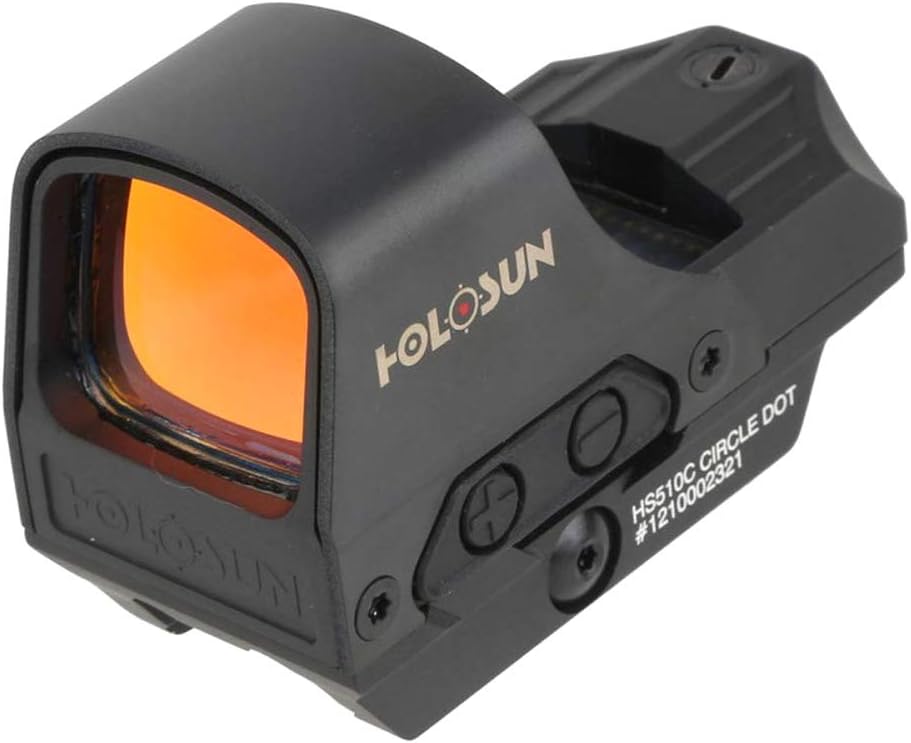
The Holosun 510C is a favorite for those with astigmatism due to its Multiple Reticle System (MRS). Often, a larger 65 MOA circle with a center dot is easier for an astigmatic eye to process than a single tiny point of light, reducing the perceived "smear."
- Specs: Solar Failsafe, Shake Awake technology, 50,000-hour battery, 2 MOA dot/65 MOA ring.
- Pros: Excellent value; titanium alloy shroud; dual power sources.
- Cons: Open emitter can be blocked by debris; slightly blue lens tint.
My hands-on notes: The buttons are tactile and easy to operate even with heavy winter gloves. I noticed that using the "circle-only" mode almost entirely eliminated my starbursting issues. The deck height is comfortable for AR platforms, and the glass is remarkably clear with minimal distortion at the edges.
What people say online: Reviewers on major retail sites praise the solar backup and the "Shake Awake" feature. Many shooters with mild astigmatism report that the green reticle version (HE510C-GR) is even crisper than the red version.
Mounting clarity: Includes a quick-detach mount for Picatinny rails. Not suitable for direct pistol slide mounting.
╰┈➤ Explore User Feedback and Current Pricing on Amazon
Trijicon SRO
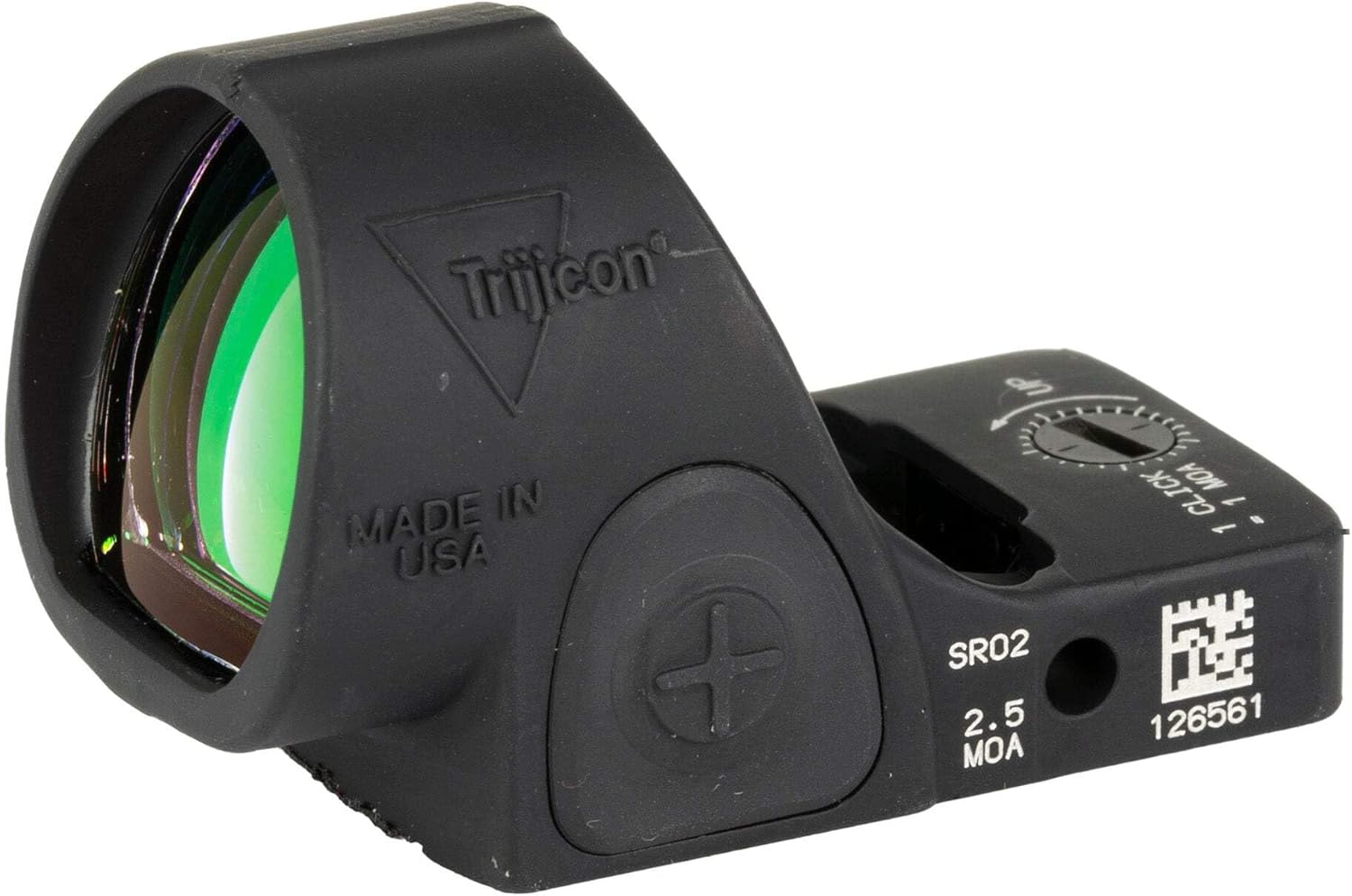
The Trijicon SRO (Specialized Reflex Optic) features a massive, round window that changes how the eye perceives the reticle. By providing a larger area of glass and a very fine, crisp LED, it minimizes the "closed-in" feeling that can exacerbate visual tracking issues for those with astigmatism.
- Specs: Large 25mm lens, top-loading battery, 2.5 MOA dot, RMR footprint.
- Pros: Enormous field of view; easy battery changes; legendary Trijicon glass quality.
- Cons: Less rugged than the RMR for duty slides; premium price point.
My hands-on notes: The SRO’s circular window makes target acquisition effortless. I found that the 2.5 MOA dot size was the "sweet spot"—small enough for precision but large enough that my astigmatism didn't turn it into a giant blur. Parallax shift was undetectable during rapid transition drills.
What people say online: Competition shooters emphasize that the SRO is the king of speed. On Reddit, many users mention that the "top-down" LED projection seems to produce a cleaner dot than side-mounted emitters found in cheaper optics.
Mounting clarity: Uses the standard Trijicon RMR footprint. Direct mountable on "Optics Ready" pistols with the correct plate.
╰┈➤ Explore User Feedback and Current Pricing on Amazon
Vortex Spitfire AR
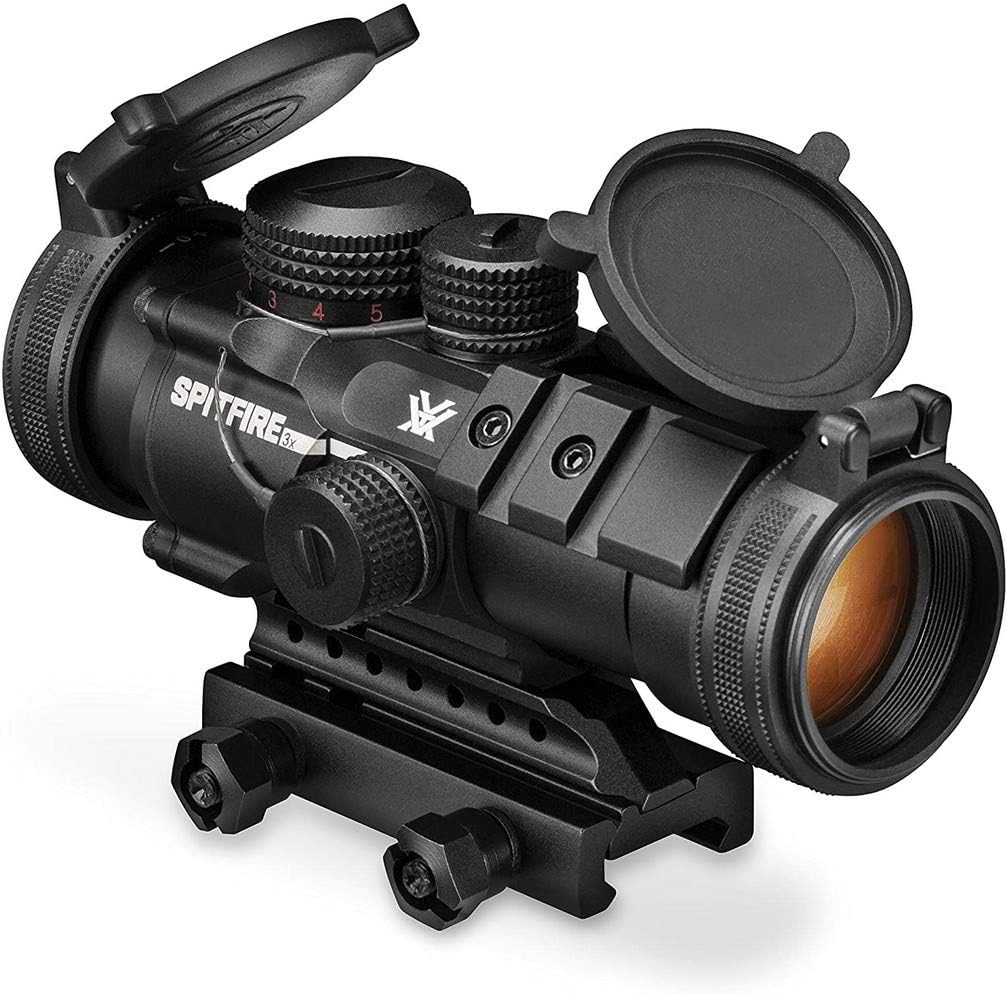
The Vortex Spitfire AR is technically a prism scope, which is the ultimate "cheat code" for the Best Red Dot for Astigmatism. Because the reticle is etched into the glass, it remains perfectly crisp regardless of your eye's shape. Even if the battery dies, the reticle stays visible in black.
- Specs: 1x magnification, DRT (Dual Ring Tactical) reticle, AAA battery powered.
- Pros: Guaranteed sharp reticle; works without battery; adjustable diopter for focus.
- Cons: Fixed eye relief (though generous); heavier than a standard reflex sight.
My hands-on notes: The diopter adjustment is the game-changer here. By twisting the eyepiece, I was able to focus the reticle perfectly to my specific vision. The button ergonomics are simple, and the use of a common AAA battery makes logistics easy for long range trips.
What people say online: This is consistently the top recommendation on forums for anyone with "severe" astigmatism. Users love the peace of mind that comes with an etched reticle, though some mention the 1x magnification has a slight "fisheye" effect at the very edges.
Mounting clarity: Comes with an integrated mount at a lower 1/3 co-witness height for AR-15s.
╰┈➤ Explore User Feedback and Current Pricing on Amazon
Primary Arms SLX MD-25
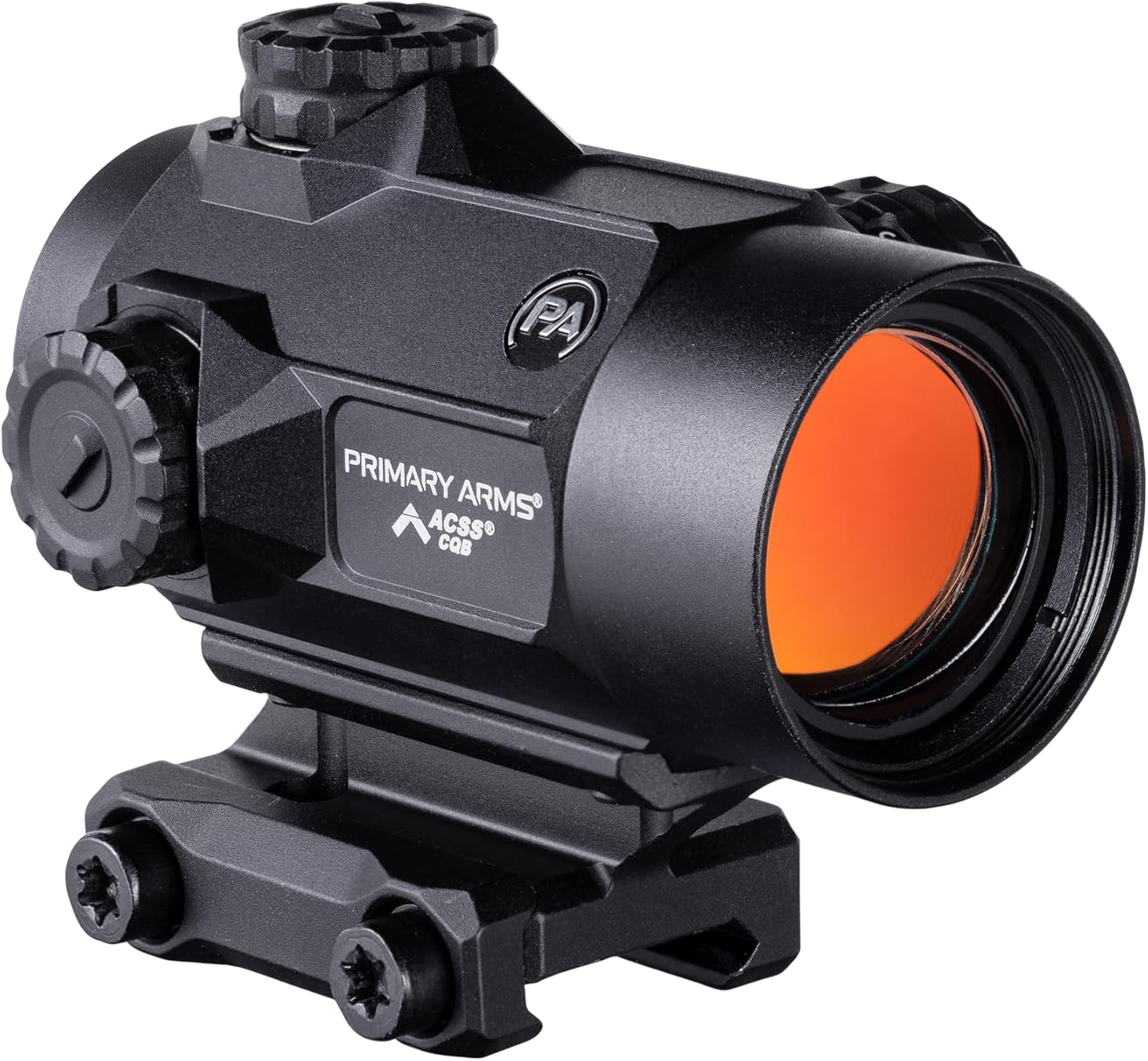
The SLX MD-25 offers a larger 25mm aperture in a compact "micro" body. For shooters with astigmatism, this larger window helps the eye "find" the dot faster and provides more visual data, which can help the brain ignore the slight streaking of the LED.
- Specs: 50,000-hour battery, 2 MOA dot, ACSS reticle options available, night vision compatible.
- Pros: Wide FOV in a small package; very rugged; extremely affordable.
- Cons: Slight emitter bulge inside the tube; brightness dial is stiff.
My hands-on notes: The MD-25 punches way above its weight class. The 25mm window feels significantly larger than a 20mm Aimpoint Micro. The dot remained relatively round for me at medium brightness settings, and the lens coatings did a great job of suppressing internal reflections.
What people say online: Owners frequently compare this to much more expensive optics. The general consensus is that the MD-25 is the best "budget" rifle optic for people who find standard 20mm tubes too restrictive or blurry.
Mounting clarity: Uses a standard Micro (T1) footprint. Includes multiple risers for different co-witness heights.
╰┈➤ Explore User Feedback and Current Pricing on Amazon
Sig Sauer Romeo7

The Sig Romeo7 is a full-size red dot that mimics the form factor of the Aimpoint CompM4. Its 30mm objective lens is excellent for astigmatism because the larger glass surface area allows for a more forgiving eye position, reducing the distortion that occurs when looking through the edges of a smaller lens.
- Specs: 30mm window, AA battery (62,500 hours), MOTAC (Motion Activated Illumination).
- Pros: Incredible battery life; uses common batteries; very robust housing.
- Cons: Large and heavy; takes up significant rail space.
My hands-on notes: This is a tank of an optic. The 30mm window provides a clear, bright image. I found that at lower brightness settings, the dot was exceptionally sharp. The MOTAC feature worked flawlessly, turning the unit on the instant I shouldered the rifle.
What people say online: Most users appreciate the value of getting a "duty grade" large-format red dot for a fraction of the price of Swedish competitors. It is often praised for its glass clarity and the convenience of the AA battery compartment.
Mounting clarity: Includes a 1.54" Picatinny riser and a low-profile mount. Ideal for full-size rifles and PCCs.
╰┈➤ Explore User Feedback and Current Pricing on Amazon
How I Tested / Evaluation Criteria
- Parallax: I tested each optic by securing the firearm in a lead sled and moving my head across the full range of the window. I looked for any shift in the point of aim relative to the target at 25 and 50 yards to ensure consistency.
- Co-witness / Deck Height: Each unit was evaluated on its ability to line up with standard iron sights. I measured the "deck height" to see how much of the window was obscured by the base and whether it allowed for a comfortable cheek weld.
- Durability: While I didn't perform a "torture test," I checked the recoil handling by firing at least 200 rounds of 5.56 or 9mm with each. I also assessed the housing material and the security of the mounting hardware.
- Battery: I verified the ease of battery replacement (top-load vs. bottom-load) and tested the "Shake Awake" or "MOTAC" sensitivity. I also checked for any flickering under rapid fire, which indicates poor battery contact.
- Brightness Range: Each optic was tested in high-noon desert sun and pitch-black conditions. I looked for a "daylight bright" setting that didn't wash out and night-vision settings that didn't bloom under tubes.
- Glass Quality: I checked for blue or green tinting, which can be distracting. I also looked for "spherical aberration" or fish-eye distortion at the edges of the glass which can worsen the effects of astigmatism.
- Controls Ergonomics: I manipulated the brightness and power settings with bare hands and tactical gloves. I looked for positive "clicks" and intuitive placement that wouldn't be accidentally bumped during movement.
- Mounting Ecosystem: I evaluated how easy it was to find aftermarket mounts. Optics using industry-standard footprints (RMR, T1, etc.) were rated higher for their versatility across different platforms.
How to Choose the Right Red Dot for This Gun
When selecting an optic for astigmatism, you must first identify the severity of your condition. If your "starburst" is minor, a high-quality LED reflex sight like the Trijicon SRO or Holosun 510C may suffice, especially if you use a larger dot size (3 or 6 MOA) or a circle-dot reticle. These larger shapes are easier for a distorted eye to "center" on compared to a tiny 1 MOA speck.
For those with moderate astigmatism, holographic sights are the next step. Sights like the EOTECH EXPS3 don't use a reflected LED; they use a laser-reconstructed image. To most people with astigmatism, this looks significantly sharper. However, holographics have shorter battery lives (1,000 hours vs 50,000 hours), so you must weigh visual clarity against the frequency of battery changes.
If your astigmatism is severe—meaning every red dot looks like a blurry mess—you should move to a prism sight like the Vortex Spitfire AR. Because prism sights have an etched reticle and an adjustable diopter (the focus ring near your eye), you can literally "dial in" the optic to your specific eye's prescription. This is the only way to guarantee a 100% crisp reticle for every user.
Finally, consider the color. Many shooters find that a Green Reticle is sharper than a Red one. This is because the human eye is more sensitive to the green spectrum, allowing you to run the optic at a lower brightness setting while still maintaining visibility. Lowering the brightness is one of the easiest ways to reduce dot distortion for an astigmatic eye.
FAQs
1. Why does my red dot look like a starburst?
This is caused by astigmatism, where your eye's cornea is shaped more like a football than a basketball. This causes light to focus on multiple points on your retina, distorting the single point of the LED.
2. Does a green dot help with astigmatism?
For many people, yes. Because our eyes perceive green more efficiently, you can often turn the brightness down lower than a red dot, which reduces the "bloom" and makes the dot appear crisper.
3. Will wearing glasses or contacts fix the red dot blur?
Corrective lenses help, but they don't always eliminate the "starburst" entirely when looking through a red dot. An etched reticle (prism sight) is the only foolproof solution for perfect clarity.
4. How can I tell if the blur is the optic or my eye?
Take a photo of the dot with your smartphone. If the dot looks perfectly round in the photo but blurry to your eye, the issue is your astigmatism. If it’s blurry in the photo, the optic may have a defect.
5. Are holographic sights better than red dots for astigmatism?
Generally, yes. Holographic sights like EOTECHs use a laser and mirrors to create a reticle that your eye perceives as being "at infinity," which often bypasses the focal issues caused by astigmatism.
Conclusion
Selecting the Best Red Dot for Astigmatism is a personal journey that depends on your specific eye health and shooting needs. Whether you choose the unshakeable clarity of an etched prism, the advanced tech of a holographic sight, or a large-window reflex dot, the goal is to spend less time fighting your vision and more time hitting your targets. By understanding how your eye interacts with different light sources and reticle shapes, you can find an optic that provides the confidence and speed you need for home defense, competition, or duty use. Regardless of your choice, always remember that training and familiarity with your equipment are the ultimate keys to success on the range.